
Turn the NMJL Card Drop Into Your Biggest Recruiting Month
Every April, the new NMJL card creates a wave of curiosity that most club operators let pass without capturing a single new player. Here's how to build a recruiting engine around it.
By Trey Peirce

TL;DR. The annual NMJL card release is the single most predictable surge of mahjong interest in the calendar year. New players Google "how to play mahjong," lapsed players re-engage, and your existing members are buzzing about the new hands. If you don't have a system for capturing that energy, you're watching your best recruiting window close every spring. This post covers five tactics that turn card season into a full pipeline of new players.
The new NMJL card drops every April, and for about six weeks afterward, more people are actively looking for mahjong instruction than at any other point in the year. Google searches for "learn mahjong" spike. Facebook groups light up with "where can I find a game near me?" posts. Your existing players are texting friends about the new hands. The entire American Mahjong ecosystem is paying attention at the same time.
Most club operators treat this window like any other month. They keep running their regular sessions, maybe mention the new card in a group text, and wonder in September why their roster looks the same as it did in March.
The operators who grow year over year do something different. They plan for card season the way a retailer plans for Black Friday: with specific offers, specific timelines, and a specific system for converting interest into seats.
Why card season is your recruiting window
The NMJL has been releasing an annual card since 1937, and the pattern is remarkably consistent. The card typically ships in early to mid-April. For the next four to six weeks, three things happen simultaneously:
Existing players re-engage. The players who drifted away over the winter come back because the new card gives them a reason. "I need to learn the new hands" is a built-in excuse to rejoin a group. If you have lapsed members (and every club does), this is when they're most receptive to a "come back" message.
Curious beginners surface. The annual card cycle generates media coverage. Boston Magazine profiled the suburban mahjong boom in 2025, describing how "busy women are eschewing pickleball courts and headache-inducing happy hours" in favor of tiles. Local news stations from Charlotte to Salt Lake have run similar stories. Each wave of coverage sends a new cohort of people searching for lessons.
Your existing players become recruiters. When someone is excited about the new card, they talk about it. They mention it at book club, at the gym, over coffee. "We just got the new mahjong card" is a conversation starter that does your marketing for you, but only if you give those conversations somewhere to land. A waitlist, a sign-up page, a scheduled beginner night.
According to Bam Good Time's State of American Mahjong 2026 report, there are now over 1,000 active mahjong clubs across the United States, with 98% playing American (NMJL) rules. The game is booming, but the supply of well-run clubs still lags the demand. If your area has 50 people who want to learn mahjong and only two places to do it, card season is when those 50 people go looking.
Five tactics that turn card season into a recruiting engine
1. Host a card-reveal event
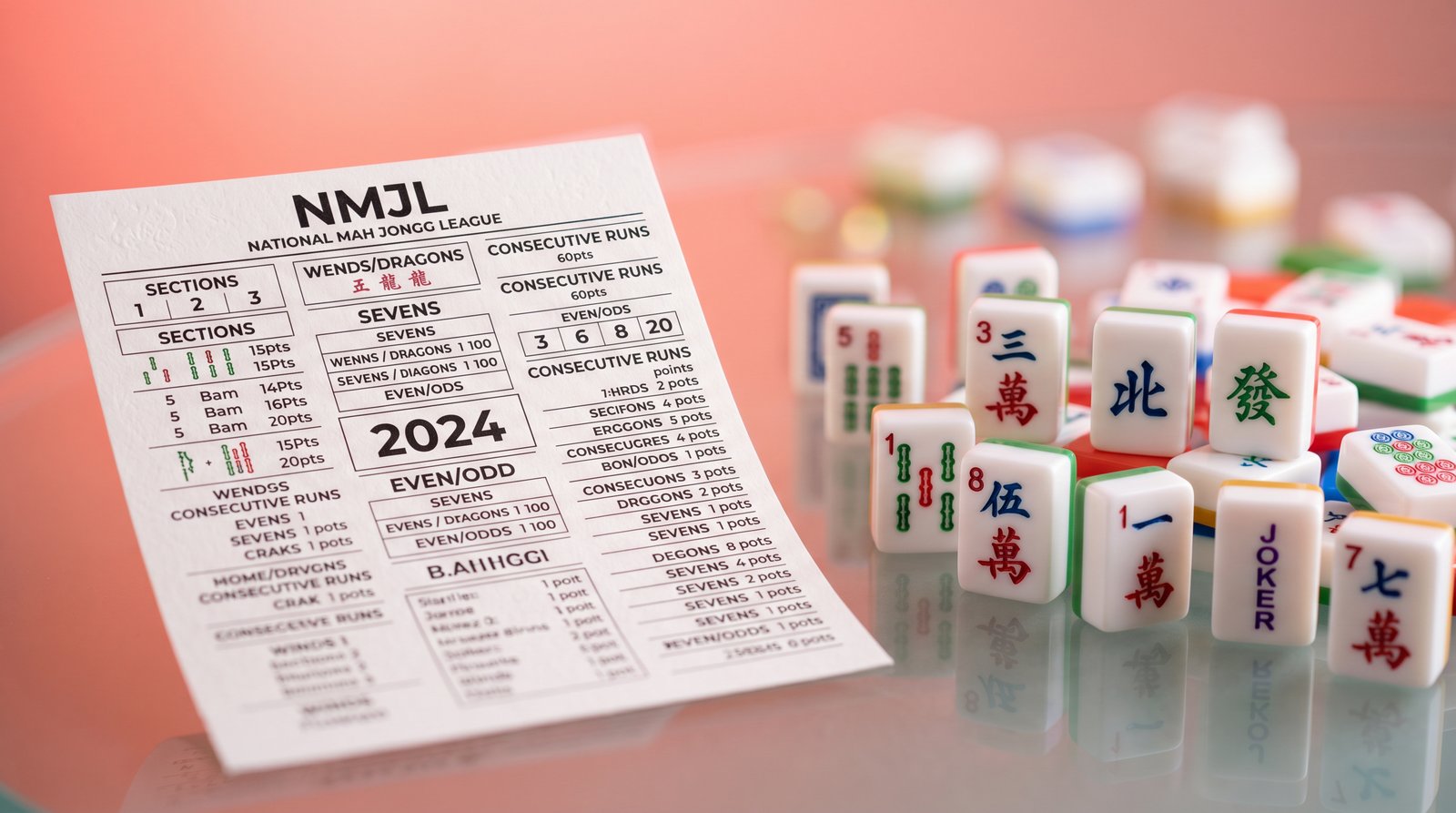
This is the simplest and most effective card-season tactic: gather your existing players to walk through the new card together, and open a few seats to newcomers.
Card-reveal events work because they're inherently social and low-stakes. Nobody knows the new card yet, so even experienced players are starting fresh. That levels the playing field in a way that a regular Tuesday night game never does.
The format is straightforward. Set a date within the first two weeks of the card's release. Walk through the card section by section: the 2026 card, for example, is built around 6s and Flowers, with the number 6 appearing in nearly 40% of all hands according to Salt Lake Mahjong Club's analysis. Discuss which hands look accessible, which look deceptive, and what the scoring patterns suggest about strategy. Then play a few rounds.
The recruiting angle: invite each existing member to bring one friend who's "mahjong-curious." Not "bring anyone you want." One specific person. That constraint makes the invitation feel personal rather than promotional, and it fills your room with exactly the kind of warm leads who are most likely to convert to regular players.
Operators like Mocha Mahj charge $40 per seat for their card-review sessions. Beach Mahj runs a "Deep Dive NMJL Card Review" at $75. Whether you charge or not depends on your model, but the point is the same: the card-reveal event is a proven format that draws people in.
2. Launch a timed beginner series starting card week
If you already teach beginner classes, card season is when you schedule your biggest one. If you don't teach yet, this is the easiest time to start.
The reason is timing. A beginner who starts learning in April or May has the full card year ahead of them, which means they're not learning hands that will be obsolete in two months. They have maximum runway to practice, build confidence, and integrate into your regular rotation before the next card drops.
Structure a four-to-six session series that starts within the first two weeks of the card release. Promote it three weeks in advance so people can plan. Price it as a package (our pricing post covers the math on series discounts). And set a cap, because scarcity drives commitment. "8 seats, first come first served" converts faster than "open enrollment."
The key move that most operators miss: build the transition into the series from day one. Session 1 is tiles and terminology. Session 4 is playing real hands. Session 5 or 6 is a "graduation game" where beginners join a table with your regular players. By the end of the series, the beginner doesn't need to make an awkward decision about whether to "join the club." They're already in it.
3. Reactivate your lapsed players
Every club has a tier of players who used to come regularly and stopped. Maybe life got busy. Maybe they had a schedule conflict. Maybe they just drifted. Whatever the reason, card season is the lowest-friction moment to bring them back.
The reactivation message writes itself: "The 2026 card just dropped and it's a wild one. We're doing a card-reveal night on [date]. Your seat is waiting."
Three principles for reactivation outreach:
Be personal, not broadcast. A direct text to Maria about her seat at Tuesday night's table lands differently than a group-chat blast to 40 people. If you have the bandwidth, individual messages convert at two to three times the rate of mass sends.
Remove friction. If a lapsed player's concern was cost, offer a free return session. If it was scheduling, mention that you've added a new night. If you don't know the concern, ask: "We'd love to have you back. Anything we can do to make it work?"
Set a deadline. "We're holding your spot through May 15" creates gentle urgency without pressure. Open-ended invitations get mentally filed under "I'll do that someday," which means never.
4. Get visible where curious people are searching
During card season, the volume of local mahjong searches spikes. People type "mahjong lessons near me," "mahjong club [city name]," and "learn American mahjong" into Google. If your club doesn't show up, someone else's does.
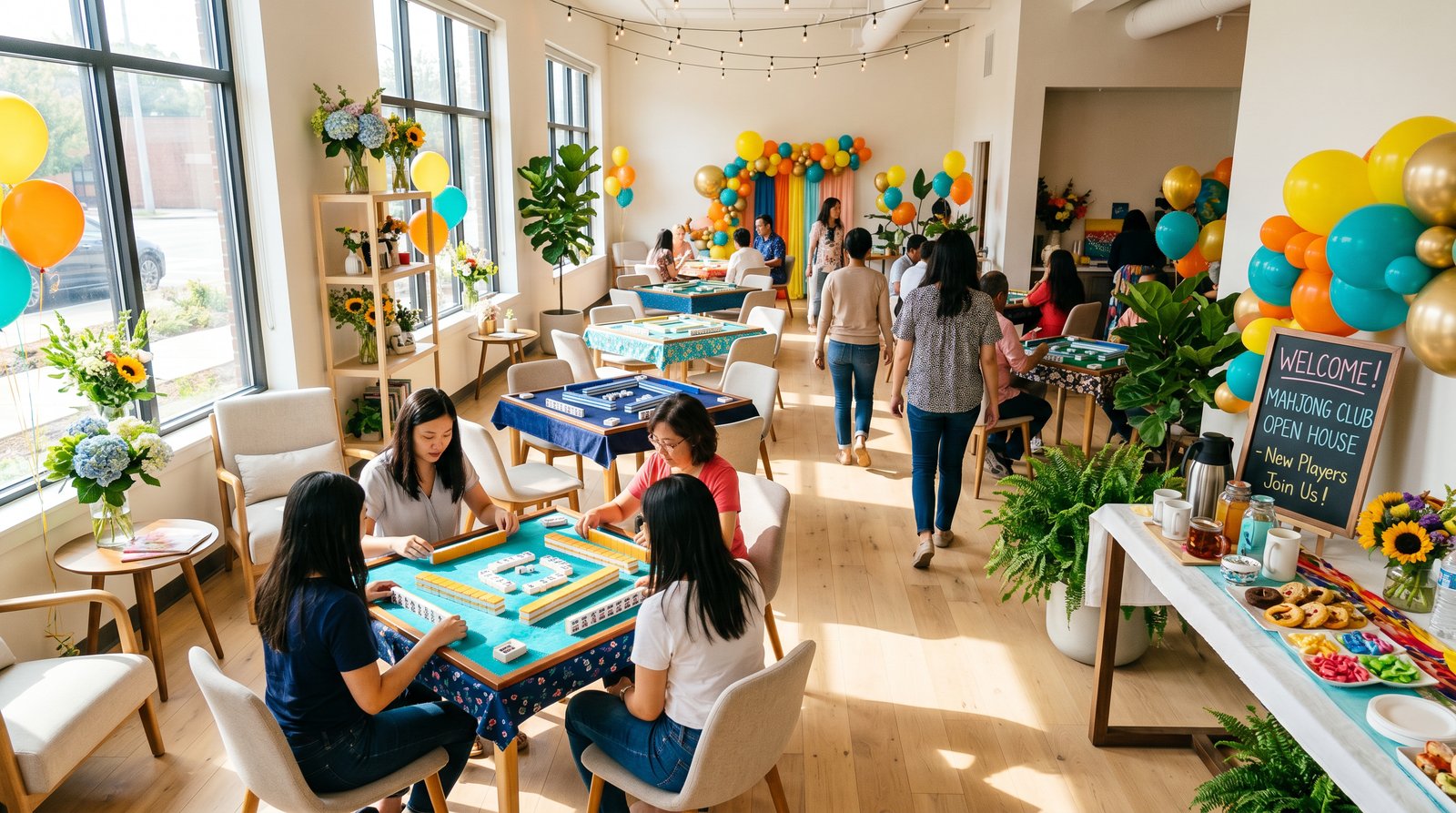
The minimum viable online presence during card season:
A Google Business profile. If you run a studio, this is non-negotiable. If you teach out of your home, you can still list a service-area business. The profile puts you on Maps, which is where most local discovery happens.
A listing on at least one directory. Bam Good Time's club directory, the American Mahjongg Association, and MahjongCompare's teacher directory all attract card-season traffic. Claiming or creating a listing takes ten minutes and pays dividends for months.
A Facebook presence. Like it or not, Facebook groups remain the primary social channel for American Mahjong. Groups like "Mah Jongg, That's It!" (67,000+ members) and "Mahj Life Community" (55,000+) are where potential students ask for recommendations. Being active in those groups (answering questions, sharing tips, not hard-selling) puts your name in circulation right when demand peaks.
A simple web page with your schedule and a sign-up form. It doesn't need to be fancy. It needs to answer three questions: what do you offer, when do you play, and how do I join?
5. Create a "Card Season" email or text to your full list
If you maintain a contact list (and you should), card season is the one time of year when a single well-crafted message to your entire list pays for itself.
The message should do four things:
- Announce the new card with genuine excitement.
- Mention one or two interesting things about this year's card (e.g., "It's a 6-and-Flowers card, so hold your 6s early").
- Promote your card-reveal event and/or beginner series with specific dates.
- Include a clear call to action: RSVP here, forward this to a friend, reply to reserve a spot.
Send it within the first week of the card's release. Not two weeks later when the buzz has cooled. Not a month later when everyone has already figured out the card on their own. The first week, when the excitement is freshest.
The math: what card season is worth to your club
Let's run a conservative scenario for a club that does these five things.
You have 20 regular players and a contact list of 40 total (regulars plus lapsed plus past inquiries).
- Card-reveal event: 20 regulars each invite one friend. Half show up. That's 10 new faces.
- Beginner series: You cap it at 8 seats. You fill it (card season demand is real).
- Reactivation: You text 12 lapsed players individually. Four come back.
- Online visibility: Two strangers find you through Google or a directory listing and sign up for the beginner series or drop in.
Total new and returning players from one card season: roughly 16-24.
If even half of those convert to regular play at $40/month in dues, that's $320-480 in new monthly recurring revenue. Over a full year, that's $3,840-5,760 in revenue from a six-week window of focused effort.
Now compare that to the alternative: doing nothing different in April and hoping people find you.
After card season: converting trial players to regulars
The recruiting push means nothing if new players don't stick. The drop-off between "attended a card-reveal event" and "became a regular Tuesday player" is where most clubs lose their gains.
Three habits that improve conversion:
Follow up within 48 hours. A text after someone's first session: "Great playing with you last night. We're at the same time next week if you want to come back." Simple, personal, effective.
Assign a buddy. Pair each new player with an experienced regular for their first three sessions. The buddy answers questions, explains table etiquette, and makes the new player feel like she belongs to a group, not just attending a class.
Offer a bridge membership. If you run a dues-based club, offer a one-month trial at a reduced rate or free. The goal is to remove the financial decision from the first visit. Once someone has played four Tuesdays in a row, the membership conversation is easy.
Don't wait until next April
The best time to plan your card-season recruiting push was three weeks before the card dropped. The second-best time is right now, while the current card is still fresh and your players are still talking about it.
Write down the five tactics above. Pick the two or three that fit your current setup. Put dates on them. Tell your players what's coming.
And if the logistics of managing a waitlist, tracking who showed up, and following up with new players sounds like exactly the kind of admin work you don't have time for, book a demo with Mahjician. The waitlist, the roster, the follow-ups: that's what we built it for.