
How to Set Mahjong Club Policies Players Actually Respect
Unwritten rules breed drama. Here are seven non-negotiable club policies, with real language you can steal, that keep your tables full and your players happy.
By Trey Peirce
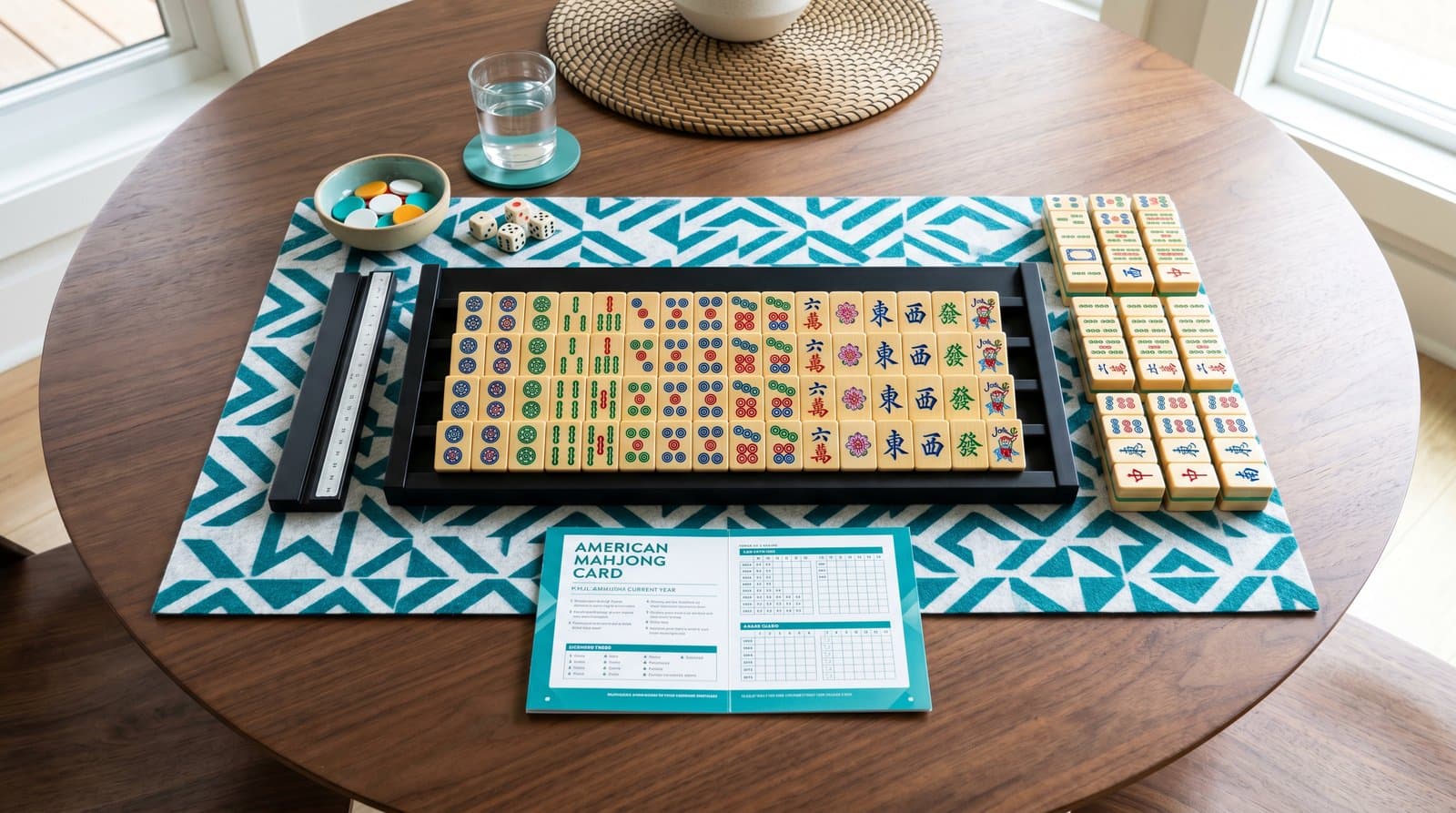
TL;DR: Unwritten rules breed drama. The clubs that run smoothly share seven non-negotiable policies: cancellation windows, sub-request protocols, payment deadlines, guest limits, pace-of-play expectations, behavior standards, and communication channels. Put them in a one-page document, share it before the first session, and enforce them consistently. This post walks through each policy with real language you can steal.
You already know the feeling. It's Tuesday night, two players cancel by text twenty minutes before game time, a third shows up with an uninvited friend, and someone at table three is taking four minutes per discard. You scramble to rearrange tables while quietly wondering why you do this at all. The answer is almost always the same: you never wrote the rules down.
The clubs that survive past year one share a common trait. They codify expectations before the first tile gets flipped. Not because the operators are control freaks, but because clarity prevents the kind of low-grade resentment that drives good players away. According to JoinIt's retention data, roughly 50% of first-year members in voluntary organizations don't renew, and "lack of engagement" is the top reason cited. In mahjong clubs, disengagement rarely starts with the game itself. It starts with frustration over how the group is managed.
Here are seven policies every mahjong club needs, whether you run two tables in your living room or twelve tables at a JCC. Each one includes sample language you can copy straight into your own club document.
1. Cancellation Windows
Nothing kills a session faster than last-minute no-shows. When a player cancels thirty minutes before start time, you can't fill that seat. Three empty seats across your roster and the whole evening collapses.
Set a clear cancellation deadline and stick to it.
Sample policy language:
"Players must cancel at least 24 hours before the scheduled session. Cancellations received after the 24-hour window will count as a no-show. Two no-shows in a calendar month may result in temporary suspension from the roster."
Twenty-four hours is the most common window, though some clubs use 48 hours for larger programs. The key is picking a number and enforcing it. If you let the first violation slide with a wink, the policy is dead on arrival.
For a deeper look at the no-show problem and what to do when it spirals, read our guide on handling mahjong club no-shows.
Why This Works
A defined window gives you time to call in a substitute. It also signals to every player that their commitment matters. When people know the rule exists and carries consequences, cancellation rates drop.
2. Sub-Request Protocols
Subs keep your tables full when life happens. But the process for requesting one needs guardrails, or it turns into a group-text free-for-all where three people show up for the same seat.
Sample policy language:
"If you cannot attend, post your sub request in the designated group chat by the cancellation deadline. Do not contact subs directly unless you have confirmed the opening with the host first. The host assigns the seat. Once a sub is confirmed, the original player is responsible for notifying that sub of the session time, location, and any fees."
The critical piece here: one person owns the roster. That person (you, most likely) confirms who sits where. When players start freelancing sub requests through side conversations, you end up with double-bookings and bruised feelings.
Tom Sloper's teaching FAQ on Sloperama makes a useful distinction between official rules and "table rules," the informal agreements that vary from group to group. Sub protocols fall squarely into the table-rules category, which means they need to be written down precisely because no universal standard exists.
If your sub process is already causing headaches, these seven sub-request mistakes are probably the culprit.
3. Payment Deadlines and Dues Structure
Money conversations are uncomfortable. That discomfort is exactly why you need a policy that handles them before anyone sits down at a table.
Whether you charge per session, monthly, or by the semester, state the amount, the due date, and the accepted payment methods. Leave nothing to interpretation.
Sample policy language:
"Club dues are $XX per month, due by the 1st. Payment is accepted via Venmo, Zelle, or check. Players who have not paid by the 7th will be moved to the waitlist until their balance is cleared. Drop-in guests pay $XX per session, collected before play begins."
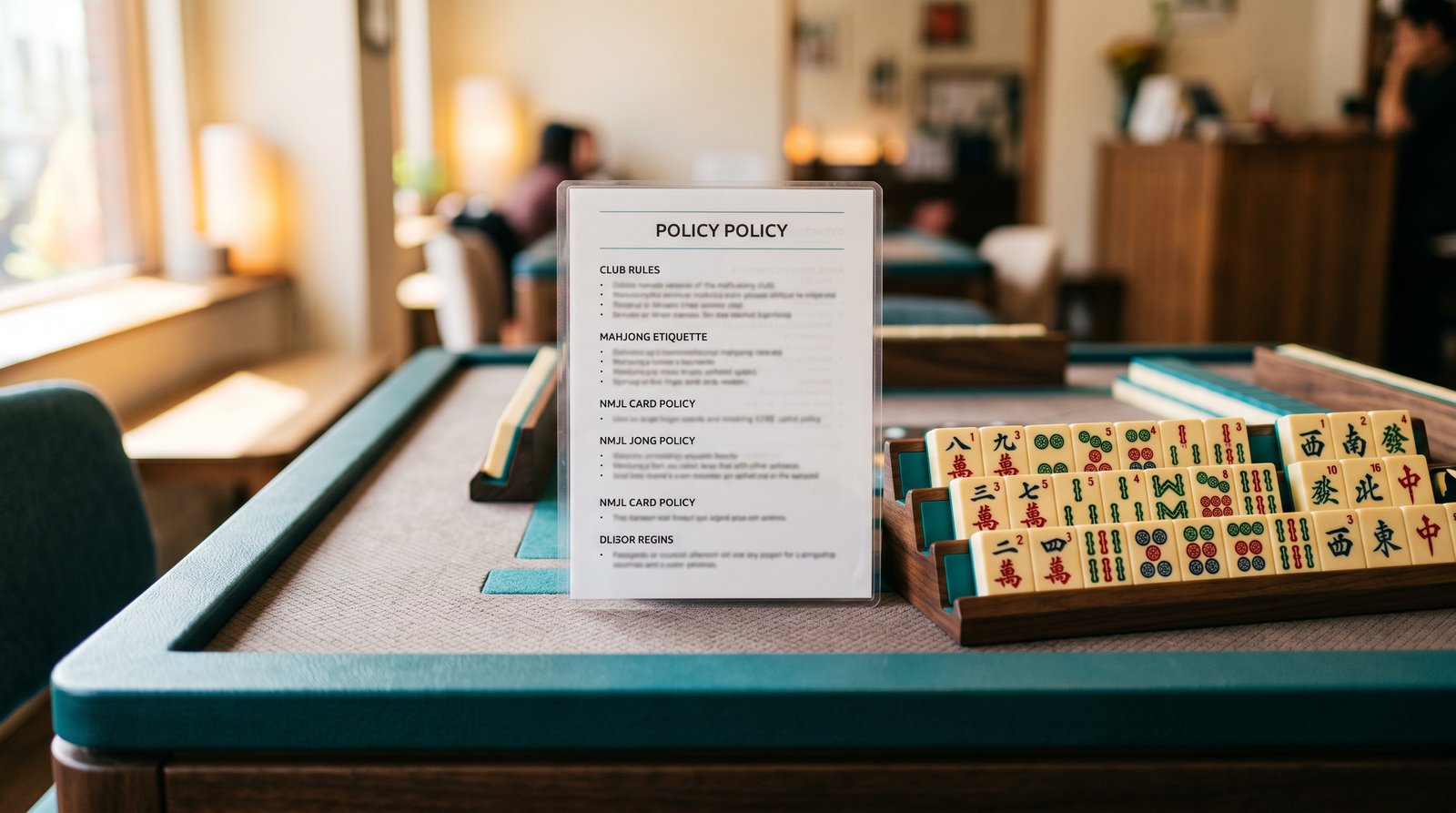
A Note on Transparency
Players respect fees when they understand where the money goes. A one-line breakdown ("$15/month covers venue rental, cards, and supplies") removes the suspicion that someone is profiting off Tuesday night mah jongg. If you do run lessons as a paid service, that's a different conversation entirely, and pricing your lessons correctly is its own skill.
The National Mah Jongg League charges members for annual cards, and that model has sustained 350,000+ members for nearly nine decades. The lesson: people will pay when the value is obvious and the terms are clear.
4. Guest Limits
Guests are how clubs grow. Unmanaged guests are how clubs implode.
A guest who shows up without warning displaces a regular. A guest who comes every week without joining is freeloading. A guest who doesn't know the rules slows every table they touch.
Sample policy language:
"Each member may bring one guest per month with 48 hours' advance notice to the host. Guests play free for their first visit. After one guest session, the visitor must join as a member or pay the drop-in rate. Guests must have basic knowledge of American mahjong (NMJL rules) or be placed at an instructional table."
Balancing Growth and Stability
You want new blood. You also want your regulars to feel like they have priority seating. The guest policy is where those two goals meet. Limiting guest frequency (once per month per member) prevents the roster from becoming unpredictable while still giving newcomers a low-pressure way to try the club.
Community centers face this tension constantly. The Community Rec Magazine programming guide recommends scheduling programs at least a year in advance and staffing to optimal levels. For mahjong clubs, "staffing" means having enough confirmed players. Guest policies protect that number.
5. Pace-of-Play Expectations
This is the policy nobody wants to write and everybody needs. Slow play is the number-one complaint in American mahjong groups, and it breeds passive-aggressive table dynamics that poison the room.
You don't need to run a shot clock. You do need to name the expectation.
Sample policy language:
"We aim to complete a minimum of four games per two-hour session. Players should make discard decisions within a reasonable timeframe. If pace becomes a concern, the host may gently remind the table. Repeated pace issues will be addressed privately."
What "Reasonable" Means in Practice
For most NMJL groups, 10 to 15 seconds per discard keeps a game moving without feeling rushed. Charleston passes should take under 15 seconds, as Sloper recommends in his teaching FAQ. The goal is not to penalize new players for thinking. The goal is to prevent one player from holding three others hostage every single turn.
If you run tables with mixed experience levels, pace management gets more complicated. Consider designating specific tables by speed or skill level. Running a club with mixed skill levels covers this in detail.
Enforcement Without Awkwardness
The host pulls the slow player aside after the session, not during it. "Hey, I noticed the table felt a little backed up tonight. Any way I can help you feel more comfortable with your decisions?" That framing turns enforcement into support. Most players know they're slow. They're embarrassed about it. Shaming them in front of the table guarantees they never come back.
6. Behavior Standards
You'd think adults wouldn't need a behavior policy. Then someone slams tiles after a bad hand, or criticizes another player's strategy mid-game, or starts a side conversation about politics that splits the room.
Name the standard. Keep it short.
Sample policy language:
"All players are expected to treat one another with respect. Tile slamming, unsolicited strategy criticism during play, and personal remarks are not acceptable. Disputes about rules will be resolved by the host referencing the current NMJL rulebook. Players who repeatedly create a hostile environment will be asked to leave the group."
The NMJL's official rules already address some in-game behavior (challenges must be between the challenger and the challenged player; other players should remain silent). Your behavior policy extends that principle to everything outside the tile wall.
The "Three Conversations" Approach
When someone crosses a line:
- First incident: A private, casual mention. "Hey, I noticed some frustration at the table tonight. We all have those moments. Just wanted to check in."
- Second incident: A direct conversation referencing the policy. "I want to make sure you saw our club guidelines. The behavior section applies to everyone, and I need to ask you to be mindful of it."
- Third incident: Removal from the roster, with a clear explanation. No drama, no public announcement, just a private message.
Three conversations give the person every chance to self-correct while protecting the rest of the group. Document each conversation with a quick note to yourself (date, what was said). If it ever escalates, you'll be glad you did.
7. Communication Channels
"I texted you." "I emailed the group." "I posted it on Facebook." "Wait, we have a Facebook group?"
When your club uses five channels, messages get lost, and people get frustrated. Pick one primary channel and make it non-negotiable.
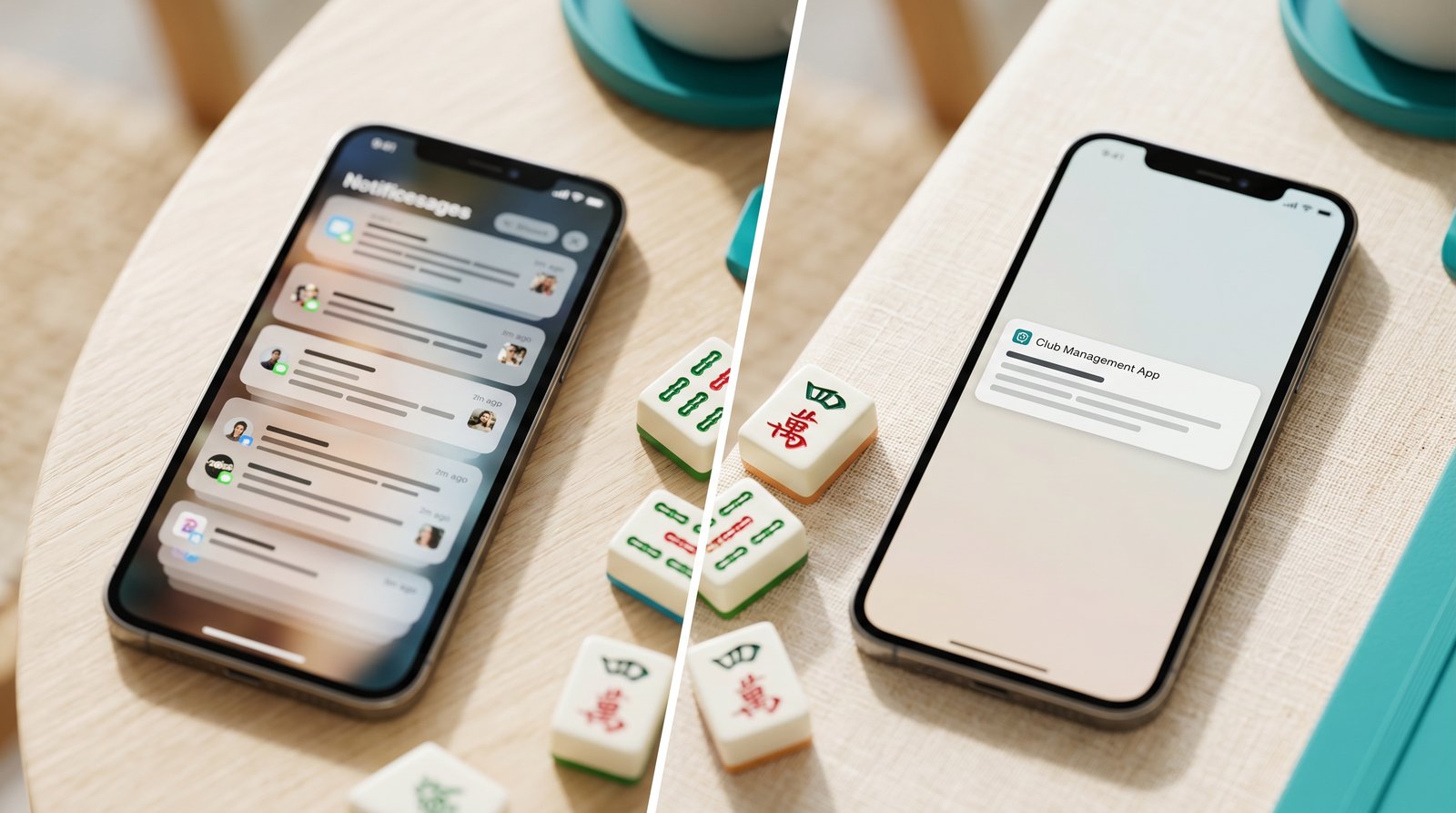
Sample policy language:
"All club communications, including schedule changes, sub requests, and announcements, will be posted in our designated WhatsApp group. Players are responsible for checking the group at least once between sessions. If you don't use WhatsApp, please speak with the host about alternatives."
Which Platform?
There's no perfect answer. WhatsApp and GroupMe are popular for their simplicity. Facebook Groups work for clubs that skew toward members already active on Facebook. Email works for more formal programs at community centers and JCCs. The platform matters less than the consistency. One channel. Every message. No exceptions.
JoinIt's research found that 10 to 50 percent of membership non-renewals are involuntary, caused by missed communications or operational failures rather than actual dissatisfaction. A single, clear communication channel shrinks that number dramatically.
Putting It All Together: The One-Page Club Document
You now have seven policies. The temptation is to write a five-page handbook. Resist it. Nobody reads five pages. One page, front and back, covers everything your players need.
Here's a structure that works:
Club Name and Session Details (top of page)
- When, where, cost
The Rules (numbered list, one or two sentences each)
- Cancellation window
- Sub-request process
- Payment terms
- Guest policy
- Pace expectations
- Behavior standards
- Communication channel
Signature/Acknowledgment Line (bottom)
- "I've read and agree to these guidelines." Name and date.
Print it. Hand it to every new player at their first session. Email a copy to everyone on the roster at the start of each season. Post it in the communication channel once a quarter.
When to Revisit
Review your policies every six months. Clubs evolve. A rule that made sense with eight players might not fit when you have forty. Ask your regulars for feedback. The players who show up every week have earned a voice in how things run, and involving them in policy updates increases buy-in.
Frequently Asked Questions
How do I introduce policies to an existing club that's never had them?
Frame it as a positive step, not a crackdown. "We've grown enough that I want to make sure everyone's on the same page. I put together a short set of guidelines so nobody has to guess about expectations." Most players will be relieved. The ones who push back are usually the ones the policies are designed to address.
What if a long-time player refuses to follow a new policy?
Have the conversation privately. Acknowledge their history with the group. "You've been here since the beginning, and I value that. These guidelines apply to everyone, including me. I need your help modeling them." If they still refuse, you have a choice: enforce the policy or watch it become meaningless.
Should I charge a penalty fee for no-shows?
Some clubs do, typically $5 to $10 per no-show. It works for some groups and creates resentment in others. A simpler approach: treat repeated no-shows as a roster management issue. After two or three in a month, move that player to the sub list and give their seat to someone who shows up consistently.
How formal should the behavior policy be?
Formal enough to reference when you need it, casual enough that it doesn't feel like a corporate HR manual. Two or three sentences is plenty. The goal is to have something in writing so enforcement doesn't feel arbitrary.
Do community center programs need different policies than private clubs?
The core policies are the same, but community centers may need additional language around facility rules, liability waivers, and ADA accessibility. The Community Rec Magazine guide to program planning recommends building risk management into every program plan. Your mahjong policies should align with whatever umbrella policies your facility already has.
Can I use these policies for tournament play?
Tournament play has its own rule set. The NMJL publishes standardized tournament rules that cover scoring, disputes, and procedures. Your club policies handle the operational layer (cancellations, communication, dues) that sits underneath the game rules.
The Policy Nobody Writes Down
There's an eighth policy that never makes it onto the one-page document, but it matters more than the other seven combined: enforce consistently or don't bother.
A policy you enforce for new players but waive for your friend who's been coming since day one is worse than no policy at all. It creates a two-tier system that everyone can see and nobody respects. If the rule exists, it applies to every player at every table, including you.
The clubs that keep players for years, the ones with waitlists instead of empty seats, aren't run by people with better tiles or fancier venues. They're run by people who decided that a little structure up front prevents a lot of chaos later. Writing your policies down is the easiest operational upgrade you'll ever make.
And if managing rosters, subs, dues, and communication across all those tables is starting to feel like a second job, that's exactly the problem Mahjician was built to solve. One platform, all seven policies, less time on logistics and more time actually playing.