
What Is the Charleston in Mahjong?
The Charleston is a pre-game tile exchange unique to American Mahjong. Learn the full ROLLOR passing pattern, blind pass rules, and strategy tips to set up stronger hands before the first discard.
By Trey Peirce
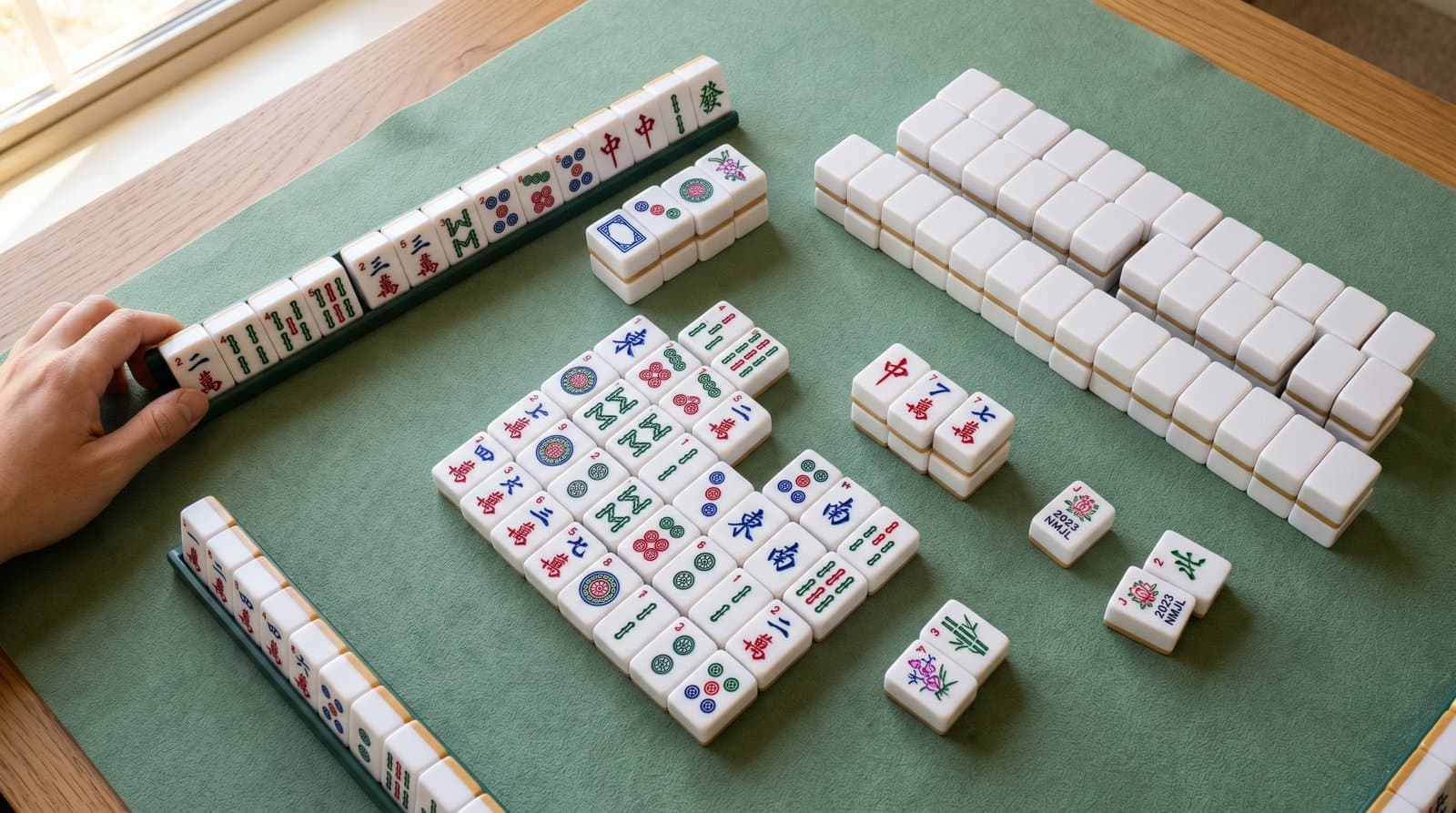
TL;DR: The Charleston is a pre-game tile exchange unique to American Mahjong (NMJL rules). Players pass three tiles at a time in a fixed pattern: right, over, left, then left, over, right. The first three passes are mandatory. The second three are optional and require unanimous agreement. A blind pass option exists on the third and sixth passes, and a courtesy pass between opposite players closes it out.
The Charleston in 30 Seconds
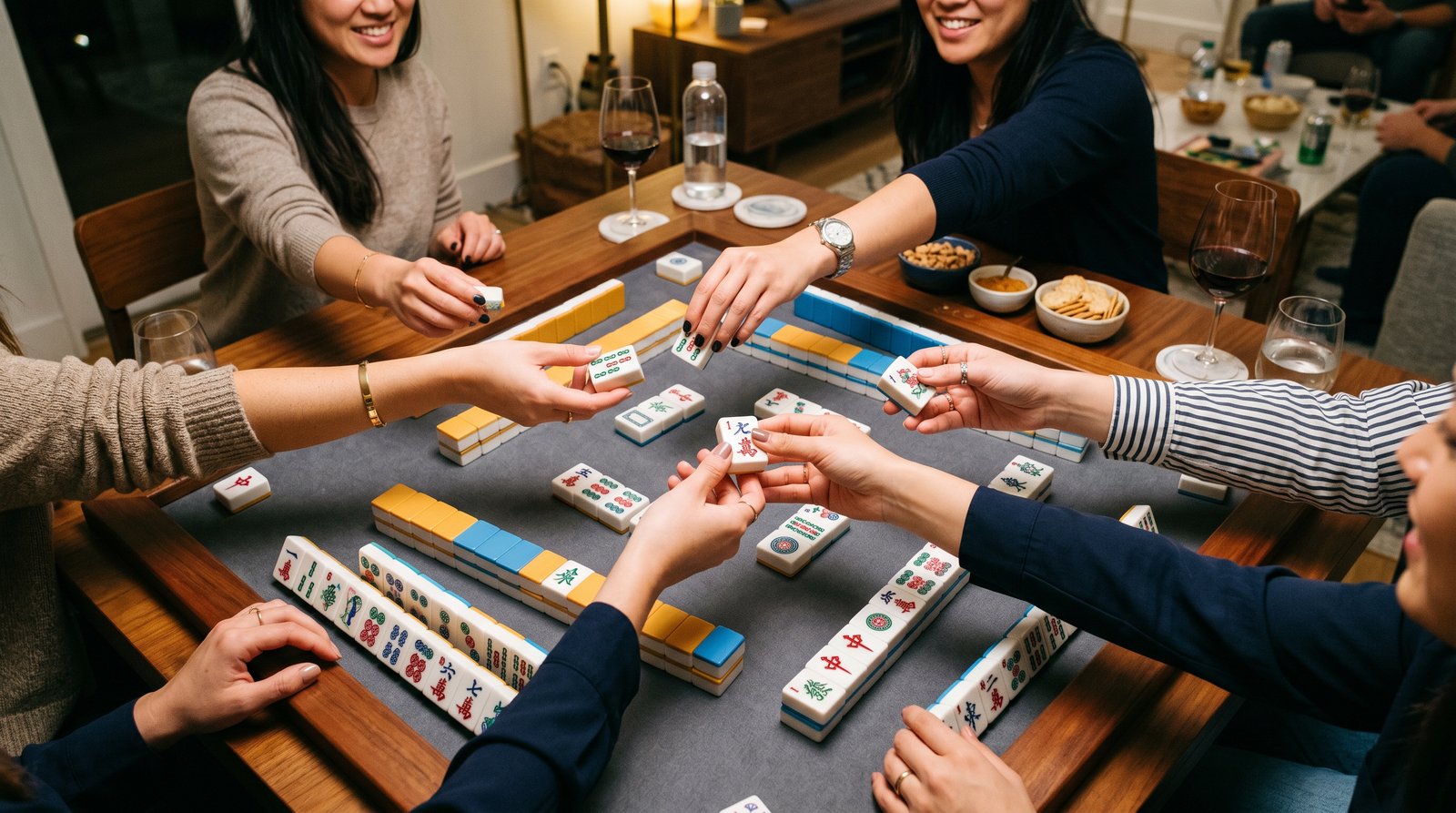
The Charleston is how every round of American Mahjong begins. Before anyone draws or discards a single tile, all four players pass tiles to each other in a structured sequence. You hand off three tiles you don't want and receive three tiles from another player, repeating this process up to six times plus a final courtesy pass.
Think of it as a draft round. You're sculpting your starting hand, shedding tiles that don't fit your plan while hoping the tiles coming your way do. No other style of mahjong has anything like it. You won't find a Charleston in Chinese Classical, Hong Kong, or Japanese Riichi rules. It exists only under NMJL (National Mah Jongg League) play, which is the dominant form of the game in the United States.
The Charleston can feel chaotic the first few times. But once you learn the pattern, it becomes one of the most strategic moments in the entire game.
The ROLLOR Pattern
ROLLOR is the memory trick that makes the Charleston click. It stands for the direction of each pass across all six rounds:
Right, Over (across), Left, Left, Over (across), Right.
That's it. Six passes, six directions, one acronym. Let's break it into its two halves.
First Charleston (Mandatory)
The First Charleston consists of three passes. Every player must participate; there's no opting out.
- Pass Right. Select three tiles from your hand and pass them face-down to the player on your right. You receive three tiles from the player on your left.
- Pass Over. Select three tiles and pass them face-down to the player sitting across from you. You receive three from that same player.
- Pass Left. Select three tiles and pass them face-down to the player on your left. You receive three tiles from the player on your right.
All four players pass simultaneously on each round. You don't take turns; everyone slides their tiles at the same time.
Second Charleston (Optional)
The Second Charleston mirrors the first but reverses the direction order:
- Pass Left. Three tiles to your left.
- Pass Over. Three tiles across.
- Pass Right. Three tiles to your right.
Here's the catch: the Second Charleston only happens if all four players agree. One "no" from any player stops it entirely. If someone has a strong hand after the First Charleston, they may not want to risk losing good tiles. That veto power is absolute.
In practice, most tables go through the Second Charleston. Declining it is uncommon unless someone picked up exactly what they needed in the first three passes.
The Blind Pass
On the third and sixth passes (the final pass of each Charleston), you have a special option called the blind pass. Here's how it works: when you receive tiles from the player passing to you, you can take some or all of those tiles and pass them along without looking at them, combining them with tiles from your own hand to make three.
For example, on the third pass (Left), you receive three tiles from your right. You could keep one, add two of your own, and pass all three to your left. Or you could pass all three received tiles straight through without peeking at them, adding zero of your own.
The blind pass exists because by the third pass, you might have already refined your hand and don't want to give away tiles that help you. Passing along tiles you haven't seen protects your strategy.
The Courtesy Pass
After both Charlestons are complete (or after just the First Charleston if someone vetoed the second), there's one final exchange: the Courtesy Pass.
This pass happens only between players sitting across from each other. Each pair can exchange zero, one, two, or three tiles. Both players in the pair must agree on the number. If you want to pass two tiles but your opposite only wants to pass one, you pass one.
The Courtesy Pass is your last chance to adjust before gameplay begins.
Rules That Trip People Up
The Charleston has a handful of rules that catch newer players off guard. Knowing them ahead of time saves you from awkward table moments.
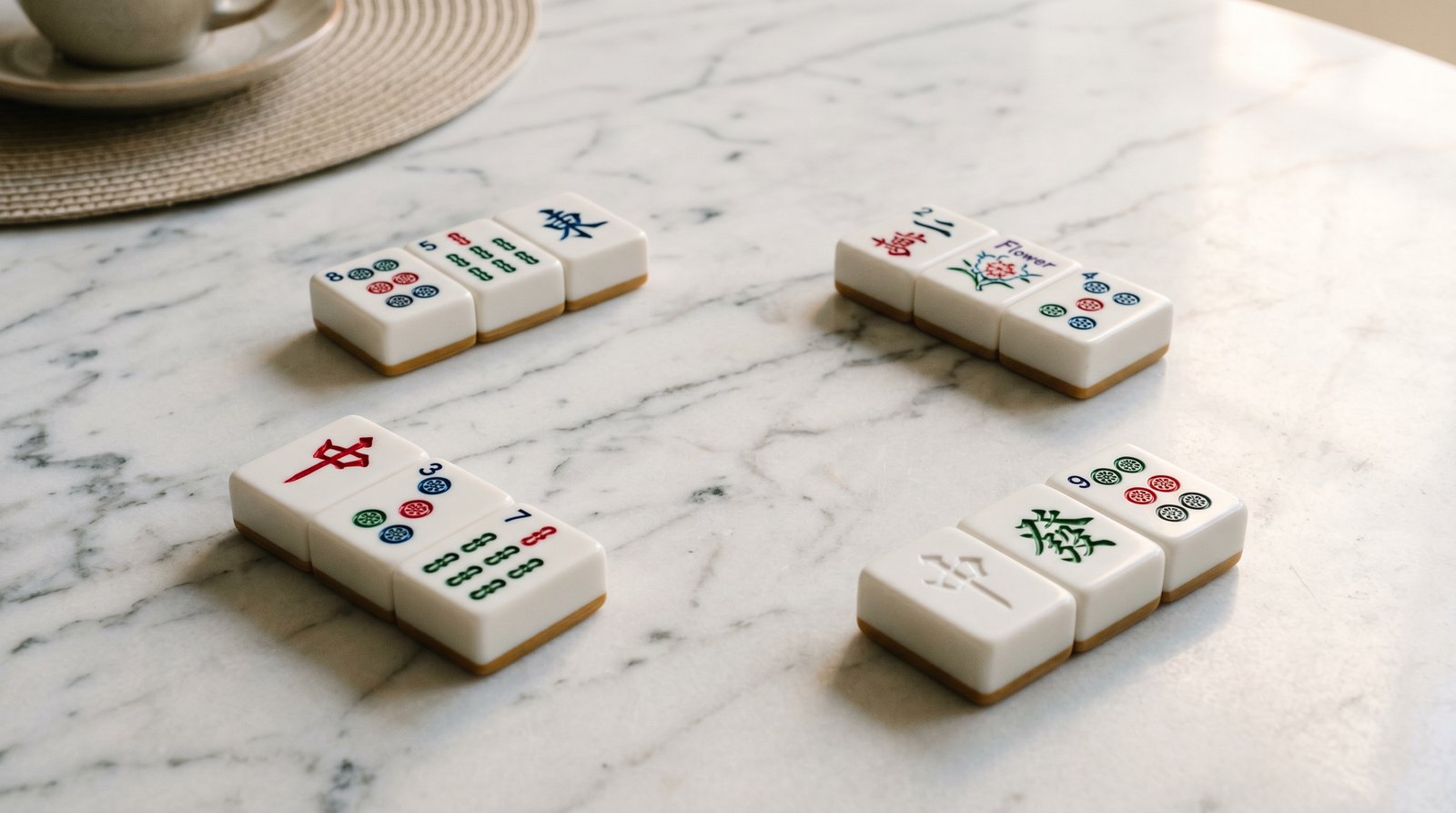
You Cannot Pass Jokers
This is the big one. Jokers are wild tiles in NMJL play, and they are too valuable to circulate during the Charleston. If you pass a joker, you'll be asked to take it back and swap in a different tile. No exceptions.
All Passes Are Face-Down
You never reveal what you're passing. Tiles go face-down across the table, and you pick up what you receive without showing anyone else. The Charleston is an information game, and showing tiles defeats the purpose.
The Second Charleston Requires Unanimous Consent
Not a majority. Not three out of four. All four players must agree or the Second Charleston does not happen. A single player can shut it down.
Blind Passing Only Happens on the Third and Sixth Passes
You can't blind pass on the first, second, fourth, or fifth passes. It's exclusive to the final pass of each Charleston set.
The Courtesy Pass Is Optional in Both Directions
Either player in the pair can pass zero tiles. If you're happy with your hand, you can decline. Your opposite player doesn't get to force a swap.
What to Pass and What to Keep
Strategy during the Charleston is straightforward once you know what you're looking for.
Keep These
- Jokers. Always. They fit into any hand.
- Tiles that match patterns on your NMJL card. If you're eyeing a specific hand, hold tiles that could contribute.
- Pairs and sets you've already started building. Momentum matters early.
- Flexible tiles. Tiles that could work in multiple potential hands give you more options as new tiles arrive.
Pass These
- Orphan tiles from suits you're not collecting. If your developing hand is heavy on Bams and Dots, pass your Craks.
- Single winds or dragons that don't connect to a hand you're pursuing. Don't hold a lonely East just because it feels important.
- Tiles you've seen multiples of passing through. If two West tiles just came and went, the remaining ones are likely scattered and hard to collect.
One important note: don't lock into a single hand too early. The Charleston sends you up to 18 tiles over the course of six passes plus the courtesy exchange. Your hand can shift dramatically between the first pass and the last. Stay flexible through at least the first three passes before committing.
5 Charleston Mistakes That Cost You Games
1. Passing tiles you actually need. It sounds obvious, but in the rush of simultaneous passing, players sometimes grab the wrong tiles. Slow down. Double-check before you slide them over.
2. Committing to a hand before the First Charleston ends. You've only seen a fraction of the tiles that will pass through your hand. Locking in too early means you might pass away tiles that would have been perfect for a better option.
3. Ignoring what you receive. Pay attention to the tiles coming your way. If you keep receiving Dots from multiple directions, other players are shedding them, which means Dot-heavy hands at the table are unlikely. That's useful intel.
4. Forgetting the blind pass exists. On the third pass, newer players often agonize over which three tiles to give up when they could simply pass through some or all of the tiles they just received. The blind pass is one of the Charleston's best tools.
5. Vetoing the Second Charleston out of fear. Yes, passing more tiles means risk. But it also means opportunity. Unless your hand is already strong, the extra passes usually help more than they hurt. Most experienced players welcome the Second Charleston.
Reading the Table During the Charleston
The Charleston isn't just about improving your own hand. It's a window into what everyone else is doing.
Watch the Speed
Players who pass quickly on a given round often have clear "junk" in a particular direction. If the player to your left passes fast on the Right pass, they probably have a lot of tiles they don't want. That tells you something about what suits or types they're avoiding.
Track Suits Coming Your Way
If you keep receiving Craks, the players passing to you aren't collecting them. That could make a Crak-heavy hand more viable for you since there's less competition.
Notice Hesitation Before the Second Charleston Vote
A player who pauses before agreeing to the Second Charleston might have a decent hand and is reluctant to risk it. That hesitation is data. They're closer to ready than the rest of the table.
The Courtesy Pass Reveals a Lot
If your opposite player wants to exchange the full three tiles, they're still searching. If they pass zero, they're confident. Adjust your defensive play accordingly.
The best Charleston players aren't just optimizing their own tiles. They're building a mental map of the table before a single tile hits the discard pile.
FAQ
Is the Charleston required in all types of mahjong?
No. The Charleston only exists in American Mahjong played under NMJL rules. Chinese Classical, Hong Kong, Japanese Riichi, and other variants do not include a pre-game tile exchange. If you're playing any non-American style, there is no Charleston.
Can you pass jokers during the Charleston?
Never. Jokers cannot be passed during any part of the Charleston, including the Courtesy Pass. They must stay in your hand. This rule is absolute under NMJL guidelines.
What happens if only three players want a Second Charleston?
The Second Charleston does not happen. All four players must agree. Even if three players are eager and one declines, the group moves straight to the Courtesy Pass.
How many tiles change hands during a full Charleston?
In a complete Charleston (both rounds plus the Courtesy Pass), each player passes up to 21 tiles total: three on each of six passes (18) plus up to three on the Courtesy Pass. That's a massive reshaping of your starting hand.
What is a blind pass?
A blind pass lets you redirect tiles you just received from another player without looking at them, combining them with tiles from your own hand to reach the required three. It's only available on the third and sixth passes of the Charleston.
Can you talk about what you're passing during the Charleston?
House rules vary, but strict NMJL play discourages discussing tile specifics during the Charleston. You shouldn't announce what you're passing or ask others what they sent you. The information asymmetry is part of the strategy.
The Charleston Sets the Tone
The Charleston is more than a warm-up ritual. It's the opening act of every American Mahjong game, and it rewards the same skills the rest of the game does: pattern recognition, flexibility, and table awareness. Players who treat it as a throwaway miss out on one of the richest strategic moments NMJL mahjong offers.
If you're new to the game, give yourself a few sessions to get comfortable with the ROLLOR rhythm. It becomes second nature fast. And if you're teaching someone, walk them through one full Charleston slowly before letting the table run at speed. That single gesture saves a lot of confusion.
The best part? Every Charleston is different. The tiles shift, the table dynamics shift, and your plan has to shift with them. That's what keeps American Mahjong interesting round after round.
Want more strategy breakdowns and rules deep-dives like this? Sign up for our free newsletter and get new Game pillar posts delivered straight to your inbox every week. No spam, no product pitches, just mahjong.