
How to Handle No-Shows at Your Mahjong Club (Without the Drama)
One empty chair cancels a whole table. Here is the three-layer system (policy, sub-fill, prepayment) that cuts mahjong club no-show rates in half within a month.
By Trey Peirce

One missing player does not just leave an empty chair. It cancels an entire table and strands three other people who showed up on time. That is the brutal math of mahjong, and it is why no-shows hit club operators harder than they hit almost any other social or recreational group. The fix is a three-layer system: a clear cancellation window, a fast sub-fill mechanism, and a prepayment structure that makes commitment real. Clubs that put all three in place typically see no-show rates fall by half or more within a month.
TL;DR: Build your no-show defense in three layers. Layer one is a written policy with a 24-hour cancellation window. Layer two is a ready sub-bench and a fast way to reach them. Layer three is upfront payment that turns a casual "maybe" into a real seat. Add automated reminders on top and most of the problem goes away on its own.

One empty seat means three people cannot play. That math makes no-shows uniquely costly in mahjong.
Why No-Shows Hit Mahjong Clubs Harder Than Other Groups
Most social activities can absorb a late dropout without catastrophe. A book club with seven people present still functions. A hiking group of nine can split into pairs on the trail. Mahjong cannot flex. The game requires exactly four players per table, no more, no fewer.
Run the numbers on a typical session night. Say you have sixteen registered players filling four tables. One person texts at 6:45 to say something came up. That is not a minor inconvenience: it is a 25 percent reduction in one table's functionality. The other three players at that table either sit out entirely or scramble to find a fill-in while everyone else waits. If a second person ghosts, you may be reshuffling two tables and burning twenty minutes of a two-hour session.
The Mahjong Society in Chicago, one of the largest organized American Mahjong communities in the Midwest, runs a strict 48-hour cancellation window for its open-play sessions precisely because of this dynamic. Mile High Mahjong in Denver enforces a $20 no-show fee after a 48-hour window, noting plainly on their policy page: "it affects everyone who plays." The fee is not punitive for its own sake. It is a signal that commitment matters here.
The downstream cost compounds quickly. Players who show up on time and get stranded notice. If it happens twice, some of them stop registering. The no-show problem is ultimately a retention problem.
The Three-Layer No-Show Defense
Layer 1: A Written Cancellation Policy
A policy that lives only in the operator's head is not a policy. Write it down, put it where players see it at registration, and make it specific.
A workable minimum policy for a community mahjong club looks like this:
- Cancellation window: 24 hours before session start. Cancellations inside that window are considered no-shows unless a valid sub is found.
- No-show consequence: One no-show results in a courtesy reminder. Two no-shows in a rolling 60-day period results in a conversation about fit. Three no-shows leads to a temporary suspension from registration until the conversation happens.
- Communication channel: All cancellations must go through the official channel (text to the organizer number, a platform cancellation, or both). Posting in a group chat does not count.
The 24-hour window matters for a specific reason: it gives you time to fill the seat before game night. If you only learn about a cancellation at 6:50 for a 7:00 session, your sub-fill mechanism cannot help you. Checkfront, a booking platform used by activity clubs, notes in their operator documentation that cancellation policies with clear time windows consistently outperform vague "please let us know" language because members understand exactly what they are agreeing to when they book.
Post this policy in your registration confirmation email, on your booking page, and as a pinned note in your club's communication channel. Read it aloud at your first session with any new member. Clarity up front prevents hard feelings later.
Layer 2: A Sub-Fill Mechanism That Actually Works
A policy creates accountability. A sub list creates solutions. The two work together: when someone cancels inside the window, your job is to fill the seat fast, not to assign blame.
Build your sub bench deliberately. Ask every waitlisted player and every player who has expressed interest but has not yet committed to a regular slot if they want to be on a "first call" sub list. Explain what it means: occasional text at short notice, no obligation to say yes, genuine first preference for future permanent slots. Most enthusiastic players say yes immediately.
Then create a fast contact method. A group text chain titled "Sub List" works fine for small clubs (under 30 players). For larger clubs or multiple sessions per week, a lightweight platform notification saves an enormous amount of manual effort. The Shaka Club, a social games group that runs regular mahjong sessions, uses a combination of SMS blasts and in-app pings to reach their sub bench within minutes of a cancellation. Their reported fill rate for inside-window cancellations is above 70 percent.
A few structural tips for a strong sub bench:
- Keep the list at least four people deep so you have multiple tries before a session.
- Rotate sub credits: players who sub get priority for open permanent slots as they become available.
- Send a "heads up" text to your sub list 48 hours before each session, not asking for commitment but letting them know a session is happening. This keeps the time in their awareness so a last-minute text is not a cold ask.
For more on building your sub pipeline without damaging your main roster, see our detailed guide: 7 Sub Request Mistakes That Kill Your Club Roster.
Layer 3: A Prepayment Structure
This is the layer most operators resist, and it is the most powerful one.
When a player books a seat and pays nothing, canceling costs them nothing. The psychological barrier to bailing is nearly zero, especially if something more appealing comes up or the weather is bad. When a player has paid, the calculation changes. They have skin in the game. Canceling means either eating the cost or doing the work to find a sub themselves.
You do not need to charge a punishing amount. Even a modest seat fee, paid at registration, changes behavior. Atlanta Mahjong Studio requires full table payment at booking, noting that reservations are for full tables of four. Mile High Mahjong allows cancellations with full refunds up to seven days out, then partial credit or no-show fees within 48 hours. Both structures accomplish the same thing: they make the commitment real before game night.
If your club has historically been free or tip-based, a sudden shift to prepayment requires communication and a grace period. The four-week rollout plan below shows how to introduce it without alienating members. If you are still figuring out your overall dues and payment structure, our guide on how to collect mahjong club dues covers the mechanics in detail.
Automated Reminders: The Easiest Win in No-Show Reduction
A large share of no-shows are not intentional. Virtuagym/Zenamu research on club attendance found that forgetfulness, not indifference, drives the majority of missed sessions. Visual ClubMate's analysis of their club operator clients found that smart automated reminders reduced no-shows by a statistically significant margin across gym, studio, and activity club contexts. The dynamic applies directly to mahjong.
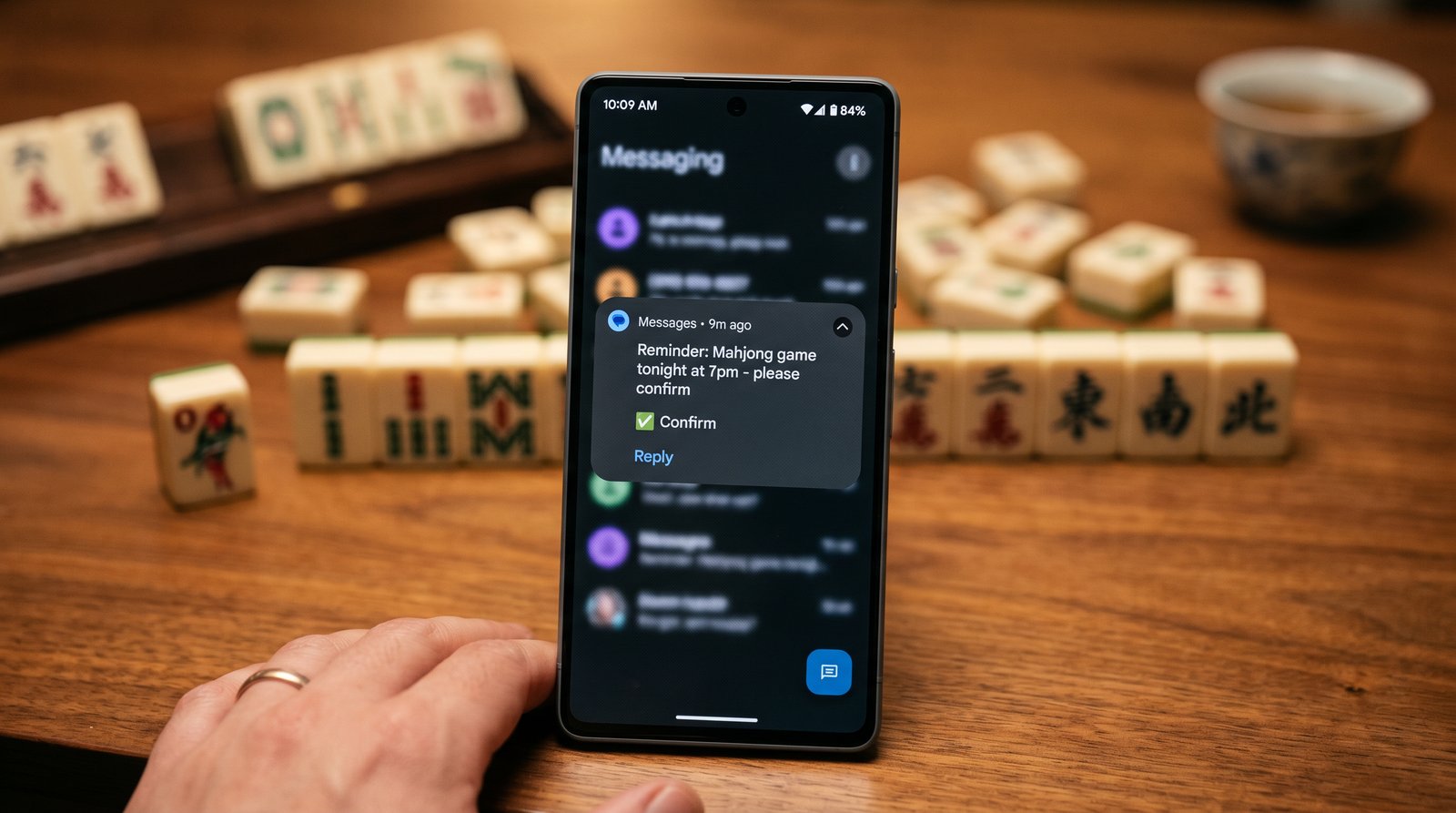
A 24-hour reminder with a one-tap confirm link removes forgetfulness from the equation.
A two-touch reminder sequence covers most of the gap:
-
48-hour reminder: Sent automatically when the cancellation window opens. Text or email. Include the session date, time, location, and a one-tap confirm or cancel link. This is when players who genuinely cannot make it will cancel, giving you time to fill the seat.
-
2-hour reminder: A short, warm ping on the day of the session. "See you tonight at 7! Table assignments will be posted at 6:50." No link required. Just a presence-confirming nudge.
The 48-hour reminder does double duty: it serves as the official notification that the cancellation window is now open, and it prompts people who forgot to cancel early to do so in time for you to find a fill. That is the window where your sub-fill mechanism can actually function.
Keep the tone warm and club-flavored, not corporate. Something like "Mahjong night is tomorrow at 7pm at [venue]. Reply CANCEL if something has come up and we will find you a sub." A cold form-letter reminder is easy to ignore. A message that sounds like it came from an actual person who cares whether you show up is much harder to dismiss.
If you are running sessions at consistent weekly or biweekly intervals, automated reminders built into your scheduling platform pay for themselves immediately. Our guide on how to build a mahjong schedule that fills every table covers the scheduling structure that makes reminders most effective.
Handling Chronic No-Shows With a Gracious Conversation
Even with a strong policy, automated reminders, and prepayment, you will eventually have a member who no-shows repeatedly. How you handle that conversation determines whether you keep a good-faith member or lose them entirely.
The goal of this conversation is not to shame the player. It is to understand what is happening and re-establish mutual expectations. Most chronic no-shows fall into one of three categories:
- Life changed: They have a new job, a new schedule, or a new obligation that makes regular attendance genuinely difficult. The gracious response is to help them find a less frequent commitment structure, such as a sub slot instead of a regular seat.
- Communication gap: They do not fully understand the downstream effect of their cancellations on other players. A specific, non-judgmental explanation ("When you cancel at 6pm, the three people at your table cannot play and we often cannot fill in time") usually lands hard enough to shift behavior without any further action needed.
- Wrong fit: They are a casual player who registered for a regular slot out of enthusiasm that did not match their actual availability. The right move is a gentle reset: release the seat to someone on the waitlist, offer them a sub slot, and preserve the relationship.
Here is a conversation script that works without generating drama:
"Hey [Name], I wanted to check in with you. We have had a couple of sessions where you were not able to make it, which I totally understand happens. I did want to flag it because when a seat goes unfilled at the last minute, it usually means the whole table cannot play. Can we talk about what would work best going forward? I want to make sure you are in a slot that actually fits your schedule."
Notice what this script does not do: it does not accuse, threaten, or lecture. It explains the impact, invites a conversation, and frames the goal as finding a better fit. Most people respond well because they feel respected rather than prosecuted.
Building a Policy from Scratch: A Four-Week Rollout Plan
If your club currently has no formal no-show policy, here is a four-week plan for introducing one without creating a revolt.
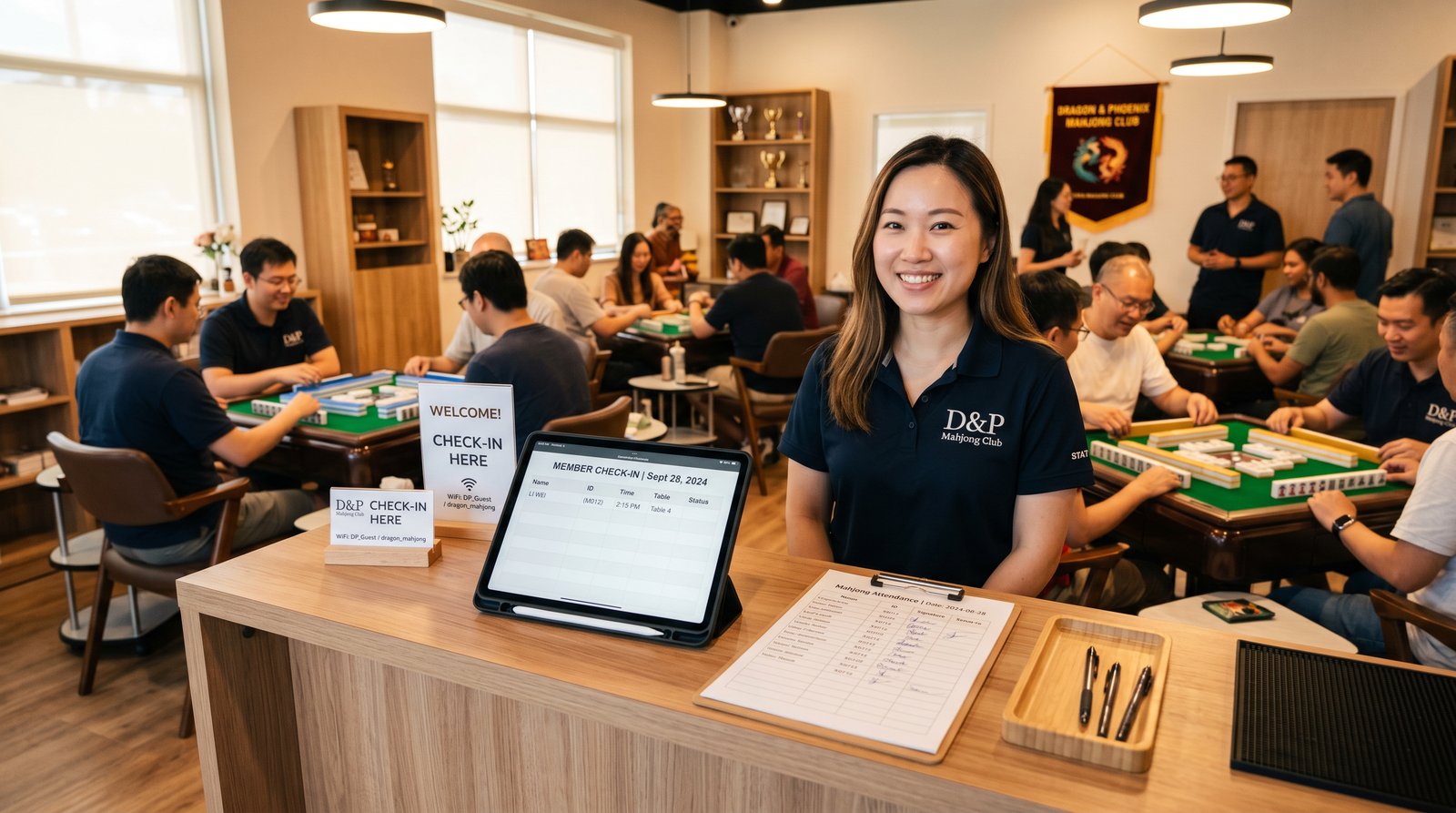
A check-in process signals that your club takes attendance seriously, which shapes member behavior before any policy conversation happens.
Week 1: Announce and explain. Send a message to your full membership explaining that you are introducing a no-show policy. Keep it positive in framing: the goal is to protect everyone's game time, not to police behavior. Share the three key elements (cancellation window, sub-list process, payment structure if applicable) and invite questions. If you are starting with a new club, build the policy into your founding documents from day one.
Week 2: Soft enforcement. Run the policy but treat any violations as learning opportunities, not punishable offenses. When someone no-shows, send a personal note referencing the policy and explaining what happened at the table. No consequences yet. Just awareness-building.
Week 3: Activate prepayment. If you are introducing paid seats, collect payment at registration starting this week. Give members a clear explanation of the refund and credit terms. Most members who intended to commit will pay without complaint. Members who push back hard on paying at all are often the ones most likely to no-show.
Week 4: Full enforcement. Apply the policy consistently from here forward. Track no-shows in a simple log (a spreadsheet row per session with names is sufficient). When a member hits their second no-show in 60 days, send the gracious conversation message. Be consistent: policies that get selectively enforced breed resentment faster than no policy at all.
The most important thing is to start. Operators who wait for the "right moment" to introduce a policy usually wait until after a bad incident, which makes the policy feel punitive rather than structural. Build it before you need it.
The Bottom Line
No-shows in a mahjong club are not just an annoyance. They are a structural problem that compounds over time, eroding attendance, trust, and the experience of every player who shows up when they said they would. A three-layer defense (clear policy, active sub bench, prepayment) addresses the problem at its roots, not just its symptoms.
The operators who manage this best are not the strictest ones. They are the ones who communicate expectations warmly, make it easy to cancel early, and make sure that showing up feels like it matters. When your members understand that their commitment protects everyone else's game night, most of them rise to meet it.
If you are ready to put the systems in place that make this manageable without a spreadsheet and a group text, Mahjician is built exactly for this. Start your free trial and have your first automated reminder sequence running before your next session.
Sources: Mile High Mahjong refund policy; Atlanta Mahjong Studio terms of service; Checkfront operator documentation on cancellation policy best practices; Glofox/Virtuagym research on no-show rate reduction; Visual ClubMate analysis of smart reminder impact on club attendance.