
Mahjong Etiquette: 12 Unwritten Rules Every Player Should Know
American Mahjong etiquette covers everything from how you handle tiles to how you handle disagreements. These twelve rules are rarely printed in any rulebook, but they keep a four-player table running smoothly for hours.
By Trey Peirce
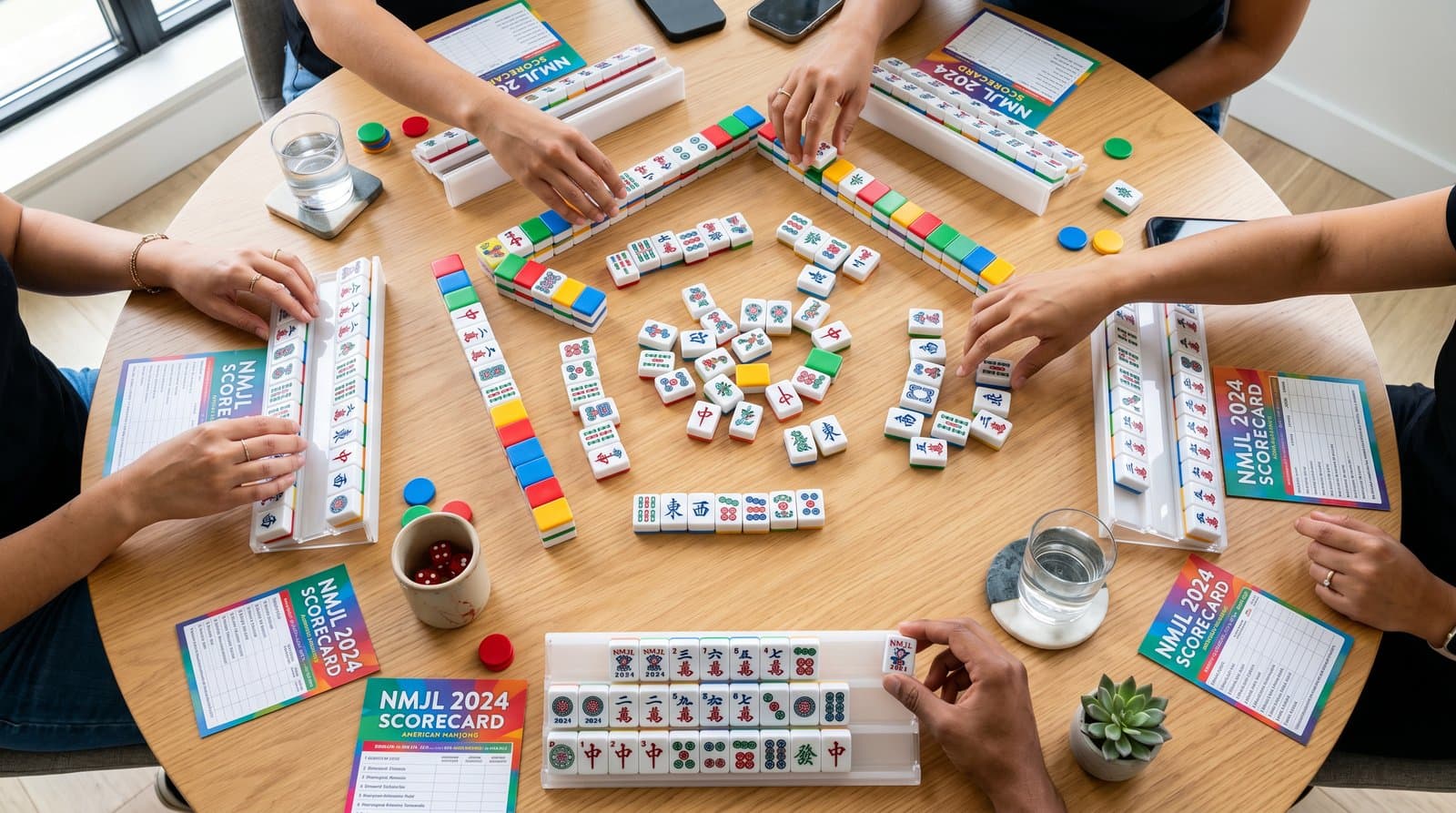
TL;DR: Mahjong etiquette is the invisible infrastructure that makes a great session possible. Most of it never appears in the NMJL rulebook, yet it shapes every game you play. The twelve rules below come up constantly at club nights, beginner classes, and competitive tables alike. Print them out, post them on the wall, and your games will run smoother from day one.
If you run a mahjong club, you already know the moment: a player names the tile they need out loud, or grabs a discard before anyone else reacts, and the whole table shifts. The written rules settle disputes about scoring and jokers. Mahjong etiquette handles everything else. These twelve unwritten rules are what separate a fun, relaxed four-player session from one that ends with people checking the clock.
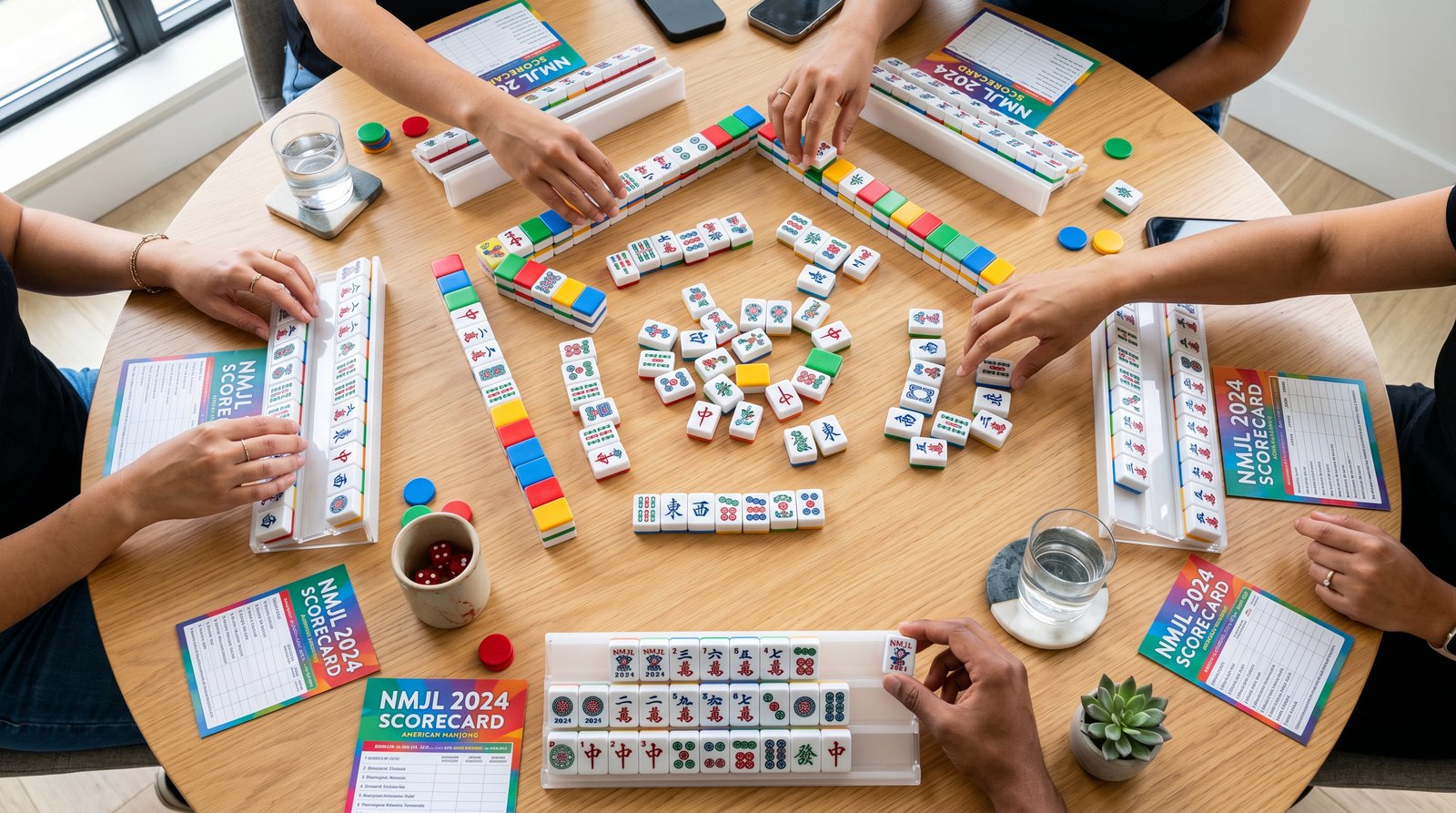
1. Don't Name the Tile You Need
This one breaks games more often than any other slip. When you say "I just need a five bam" or sigh loudly after someone discards the crack you wanted, you give the table information it hasn't earned. Other players will unconsciously (or very consciously) shift what they discard based on what you've revealed.
The NMJL's Mah Jongg Made Easy (2024 edition) does not list this as a formal rule, but it is treated as a fundamental courtesy at every serious table. Keep your hand to yourself. Keep your face to yourself too, if you can manage it. Experienced players read expressions as readily as they read discards.
If you run a club, this is worth mentioning at the start of every beginner session. New players do it without realizing it, and catching the habit early saves friction later.
2. Discard with Purpose and Pace
Slow play kills momentum. Dana Lange, a 25-year mahjong instructor, uses a simple benchmark: beginners should aim for about 40 minutes per game, and experienced players should be finishing in roughly 20 minutes. Chronic hesitation pushes those numbers in the wrong direction.
When it is your turn, you should already have a discard in mind. Spend your thinking time during other players' turns, not during your own. Pick up, assess, discard. Keep the game moving.
That said, purposeful is different from reckless. Throwing a tile without checking your hand is just as disruptive as taking two minutes per turn. The goal is a steady, confident rhythm that everyone at the table can settle into.
3. Announce Clearly When You Call a Tile
When you want a discarded tile, say it loud enough to be heard and say it fast. In American Mahjong, calls are time-sensitive. A quiet or mumbled "I'll take that" followed by a dispute about whether you actually called it creates exactly the kind of confusion that ends friendships.
Say the word clearly: "Mah Jongg," "Take it," or whatever your group uses as standard. The point is unambiguous and immediate.
If you run a club, establish a house call convention during orientation. Consistency across your tables eliminates at least half the "did you say something?" arguments before they start. A single clear standard, applied evenly, is one of the simplest things you can do to reduce friction at a club night.
4. Rack Your Tiles Properly
Your rack faces you, not the table. Tiles stay upright and seated properly so they do not lean, slide, or reveal themselves to adjacent players. This sounds obvious until you sit next to someone whose rack has gradually listed to a 45-degree angle and you can read two of their tiles without trying.
Proper racking also applies to your exposures. Keep them flat, clearly visible, and in order so there is no confusion about what you have called. The NMJL rulebook addresses joker exchanges on page 23, and the prerequisite for a legal joker exchange is that exposures are clearly displayed. Sloppy racking invites unnecessary disputes.
Good tile hygiene is a small thing. It signals that you respect the other players' experience, and that respect is the foundation of everything else on this list.
5. Respect the Charleston
The Charleston is the most socially loaded part of the game, and it deserves real attention. Timing matters. A first pass should move within 2 to 3 minutes. Subsequent passes should take no more than 15 to 20 seconds each. When one player is still agonizing over their left while everyone else has passed twice, the game has not started and the tension is already building.
Respect the Charleston also means passing honestly. You should not pass tiles you know the player to your left desperately needs just to sabotage them. That is gamesmanship at a social table, and it does not belong there.
Finally, the blind pass is a courtesy, not a weapon. Use it to shed tiles you genuinely do not want, not to dump your worst tiles on a specific player.
6. Don't Touch Other Players' Discards
The discard pile is live information. Once a tile lands in the center, it belongs to the shared game state. Rearranging it, picking up tiles to look at them more closely, or handling another player's discards without consent disrupts everyone's ability to read the wall.
This rule extends to your own discards. Once a tile leaves your hand and hits the table, it is gone. You cannot pull it back because you changed your mind. The moment your fingers release, the discard is final. This is standard across organized play and is one of the first things experienced players will call out if it happens.
If you host games at home, make this explicit before your first hand. A lot of beginners treat the discard pile like a shared artifact they can interact with freely. Set the expectation early.
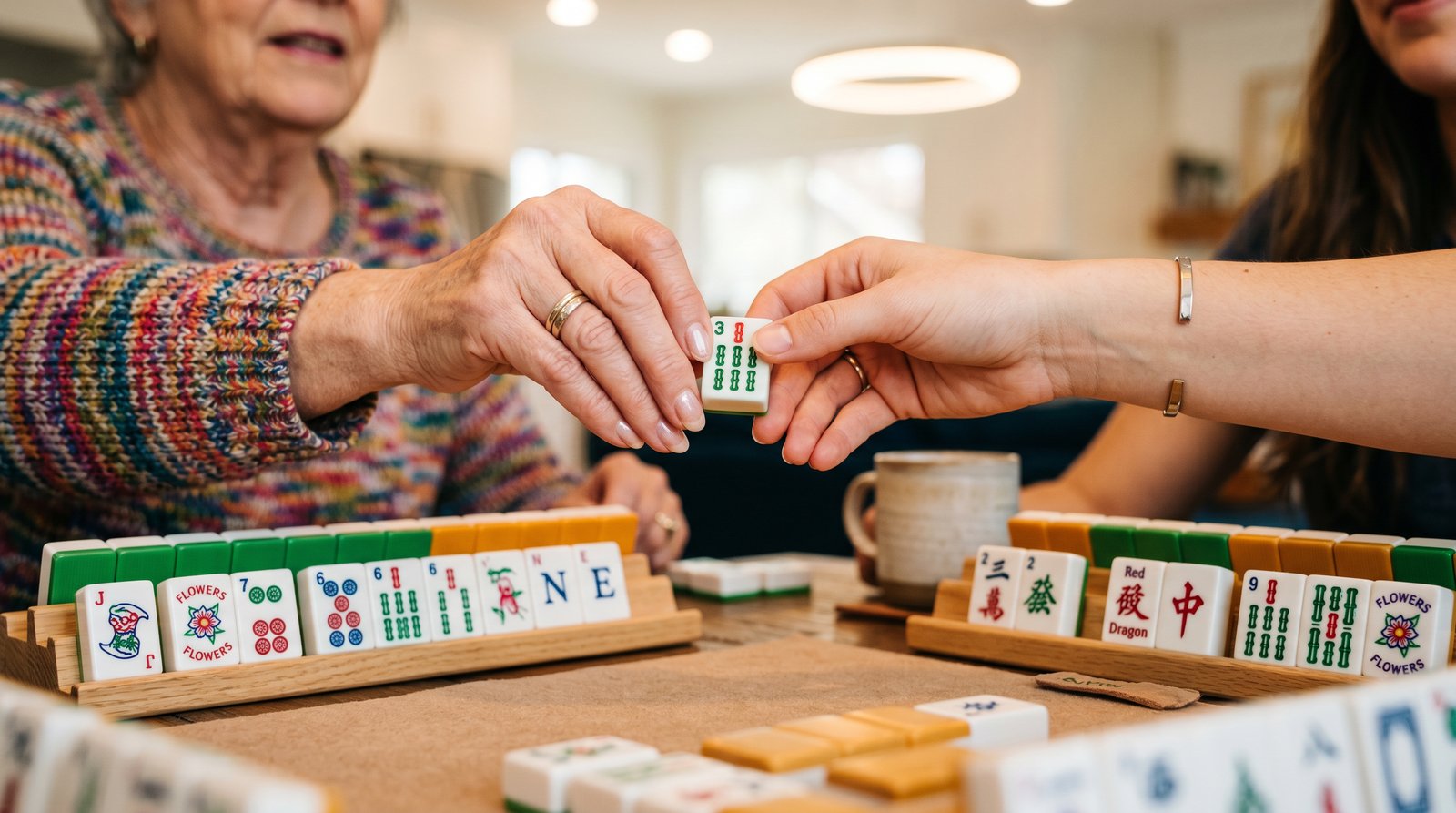
7. Put Your Phone Away
Nothing tells the table you are not present like reaching for your phone between turns. In a four-player game, your attention is relevant even when it is not your turn. You are watching discards, tracking what other players need, adjusting your strategy in real time.
A glanced-at phone is a missed discard. A missed discard means you called a tile too slowly or not at all. That is a tangible impact on the game, not just a social slight.
If you run a club, a posted phone policy solves this before it starts. A simple "phones on silent and face-down during play" sign next to the rack instructions is enough. Players who need an exception will ask. Everyone else will follow the norm.
8. Handle Disputes Without Raising the Stakes
Disputes happen. Someone thinks they have Mah Jongg and they do not. A joker exchange gets called into question. A discard gets contested. The way you handle these moments determines whether the table stays fun.
Tom Sloper, whose Sloperama FAQ has been a reference for American Mahjong players for decades, puts it plainly: harmony is more important than winning. That is not a soft sentiment. It is practical advice about what keeps people coming back to your table.
When a dispute arises, state your position calmly, check the rulebook if needed, and accept the ruling. If you are the organizer, you set the tone, as Bam Good Time notes, and a host who models graceful dispute resolution creates a table where players feel safe bringing up problems without fear of escalation.
9. Keep Your Exposures Honest
An exposure is a public commitment. When you call a tile and lay down a pung or kong, that exposure must accurately represent what you have declared. Rearranging an exposure to obscure what you called, or failing to correct an honest mistake once you notice it, moves from etiquette into the territory of fair play.
This also means keeping your card visible. In American Mahjong, you choose a hand from the NMJL card and play toward it. Keeping your card face-down or angled so other players cannot see which year's card you are using is technically within the rules but creates an uncomfortable asymmetry at a social table.
Play openly. If you are not sure whether something you did was within the rules, ask before the game continues rather than hoping no one noticed.
10. Welcome New Players Gracefully
Every experienced player at your table was a beginner who got invited to someone's game. The way you treat new players is a direct reflection of your club's culture, and it shapes whether those players come back.
Welcoming new players does not mean slowing down to teach a full lesson during the game. It means being patient when they ask questions, not sighing when they take a few extra seconds to find their discard, and not making sharp comments when they make a rookie mistake. If you want to teach, offer a quick tip after the hand, not during it.
If you are building a club, read everything you can about how to start a mahjong club. The way you onboard your first ten players sets the social standard for everyone who joins after them.
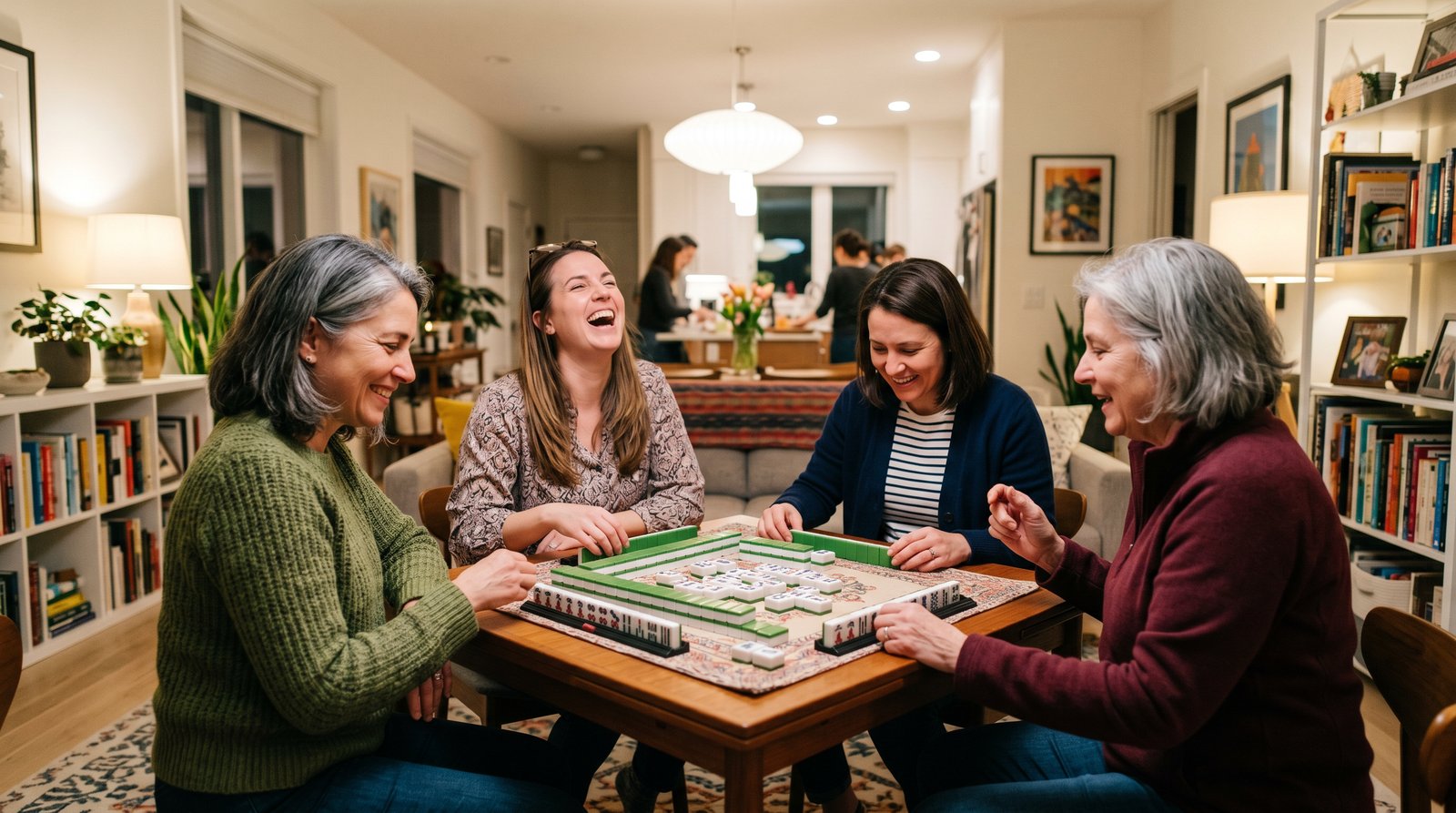
11. Don't Offer Unsolicited Strategy Advice
Watching someone make a choice you disagree with and staying quiet is genuinely hard. Do it anyway. Unsolicited advice during a live game is almost always experienced as condescending, even when it comes from a good place.
If a player asks for feedback, give it honestly and specifically after the hand ends. If they do not ask, assume they are playing the hand they have chosen to play. They may be working toward something you cannot see.
This matters especially for club operators. A table culture where advice-giving is normalized ends up with one or two dominant voices and three players who feel watched and corrected. That is not a table people come back to. Let players play their own game.
12. End the Game Clean
When the game ends, everyone stacks tiles, returns them to the box in order, puts the card and racks away, and leaves the table as they found it. This is not glamorous etiquette. It is just respect for the space and for the next group who will use it.
At a club or hosted game, the host sets the standard here. If you start restacking while the last hand is being scored, most players will follow. If you leave it to drift, someone ends up doing all the work and remembering that the next time they are deciding whether to come back.
Clean endings also give the table a natural close: a few minutes of putting things away together, recapping the best hands, laughing about the Charleston. That decompression is part of the experience.
Frequently Asked Questions
Is it against the rules to tell other players what tile you need?
The NMJL rulebook does not formally prohibit it, but it is widely considered a breach of mahjong etiquette. Naming the tile you need gives opponents information they can use against you and changes the fair play of the game. Most experienced groups enforce this as a firm social rule even if it is not in writing.
How do you handle a player who is consistently slow?
Address it directly but kindly before the next game, not mid-hand. Use a practical frame: cite the pace benchmarks (40 minutes per game for beginners, 20 for experienced players) and ask whether the player wants help working on decision speed. Framing it as a learning opportunity lands better than a complaint.
What should a club organizer do when two players have a recurring dispute?
Separate them to different tables for a few sessions. Most recurring disputes are about proximity and habit rather than deep conflict. If the issue persists, have a private conversation with each player individually. The organizer's job is to protect the table, not mediate every personal difference. For more on running a club well, see how to price your mahjong lessons and the broader club operations resources on this blog.
Can I correct another player's exposure if I see it is wrong?
If you notice an error in another player's exposure, you can call attention to it, but do it calmly and without a tone of accusation. Honest mistakes happen, especially with new players. The goal is to keep the game accurate, not to embarrass anyone. If the correction changes the outcome of the hand, consult the rulebook and, if needed, the group's agreed house rules.
Good Etiquette Is Club Infrastructure
The twelve rules above are not decorative. They are what make a two-hour session at your table something people look forward to rather than something they just endure.
If you run a club, you already know that the logistics side of operations (scheduling, payments, waitlists, renewals) takes real time to manage. Etiquette is the other half of club culture, and it is just as important. Operators who build a clear culture early, as Bam Good Time puts it, set the tone in a way that takes care of itself. Post these rules somewhere visible. Walk through the top three at the start of every beginner session. Revisit them when a dispute comes up.
When the culture is healthy, players stay longer, refer friends, and come back week after week. That is not an accident. It is the result of deliberate choices about how the table runs.
If you want help running the operational side with the same intentionality you bring to your table culture, Mahjician was built for exactly that. Schedule a demo and see how club operators are using it to handle everything from session booking to renewal reminders so you can spend your club night actually playing.