
How to Teach the New NMJL Card Without Losing Half Your Group
Every April, the new NMJL card sends a wave of players quietly out the door. A structured five-session transition plan turns that annual churn into a retention advantage.
By Trey Peirce
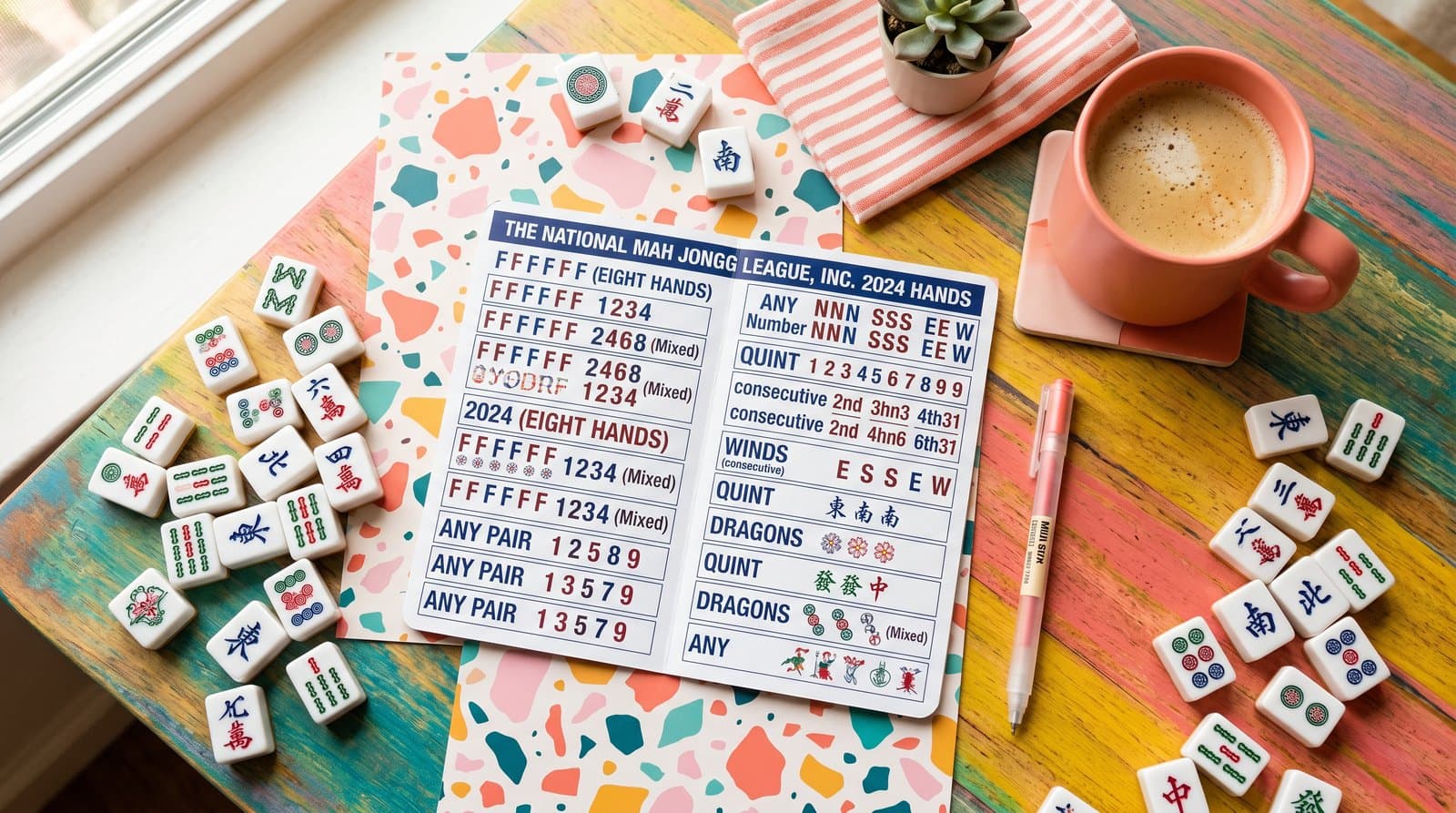
TL;DR Every April, the National Mah Jongg League releases a new card, and every April, instructors watch a chunk of their roster quietly disappear. The players who leave aren't quitting mahjong. They're quitting the frustration of feeling like a beginner again. A structured five-session transition plan (orient, anchor, pattern-match, pivot, play) turns that annual reset into a retention advantage instead of a churn event.
You already know the pattern. The NMJL publishes the new card in April, and by May your attendance sheet has holes in it. Not because those players lost interest in the game. Because nobody gave them a bridge from the card they finally felt confident with to the card that just replaced it.
The fix is a five-session transition framework that moves your group from "overwhelmed" to "comfortable" in about three weeks. Below is the exact plan, the psychology behind it, and the communication strategy that keeps players enrolled before the card even ships.
Why Players Leave After the New Card Drops
The annual card change is the single biggest retention threat most NMJL instructors face. And the reason isn't complexity. It's identity.
Your intermediate players spent months building real confidence. They learned to read the card quickly, pick a hand early, and pivot when the wall didn't cooperate. That confidence is part of why they keep showing up. When the new card lands, all of that evaporates overnight. They're back to scanning every section, second-guessing every pick, and losing to players who adapted faster.
Nobody enjoys feeling like a beginner at something they were finally good at.
There's a social layer too. Your sessions aren't just instruction; they're a weekly gathering. Players have a table they sit at, people they joke with, a rhythm they count on. When the new card makes them feel incompetent, the social cost of showing up goes up. Suddenly "I'll skip this week" turns into "I'll come back when I feel ready," which turns into silence.
The players most at risk aren't your newest members (they're used to learning) or your strongest players (they'll grind through it). The ones who leave are your middle tier: competent, social, loyal, and quietly embarrassed to struggle in front of the group. As experienced NMJL instructors in communities like Mahjong Instructors Network have noted, the players who ghost after the card change are almost always the ones who were finally hitting their stride.
The Retention Math You Can't Ignore
If you run sessions for 60 players and lose 20% during the card transition, that's 12 paying members gone. At even a modest per-session fee, the annual revenue hit adds up fast. And those players rarely come back in June or July. They find a casual home game, or they just stop playing until the next card feels distant enough that they don't remember what they forgot.
Losing players to a predictable, solvable problem is the most expensive kind of churn. You know it's coming. You can prevent it. That's the whole point of a transition plan.
The Five-Session Transition Framework
The goal here is simple: move your players from "I don't know this card" to "I'm comfortable enough to enjoy playing again" in five structured sessions over roughly two to three weeks. Each session has one job. No session tries to do everything.

Session 1: Orient
Distribute the new card. Do not teach hands yet.
That instinct to jump straight into strategy is strong, and you need to resist it. The first session is about geography, not gameplay. Walk your group through the high-level changes from last year. Which sections moved? Which ones expanded? Which familiar categories disappeared?
Have players hold last year's card in one hand and the new card in the other. Compare sections side by side. Let them notice patterns on their own before you narrate.
The goal is familiarity, not mastery. When players leave this session, they should feel like they've read the map even if they haven't driven anywhere yet.
Instructor tip: Give players five minutes of silent reading time at the start. The urge to fill that silence with teaching is real. Let them sit with it.
Session 2: Anchor
Now you teach hands, but not all of them. Pick three to five "anchor hands" that are structurally similar to last year's popular hands.
Start with the sections where recognition is highest. Quints, 369, and any familiar consecutive runs are usually safe bets. Your players will light up when they see something they already know how to play, even if the specific tiles changed.
This is a confidence session. You're proving to your group that the new card isn't a total reset. It's an evolution. Seventy percent of the card typically carries forward in some recognizable form (Mah Jongg, That's It! tracks these year-over-year comparisons). Lean on that continuity.
Instructor tip: Ask your players which hands from last year were their go-to picks. Then show them the closest equivalents on the new card. Personalized anchors stick better than generic ones.
Session 3: Pattern-Match
Now introduce the genuinely new hands, the ones with no prior-year equivalent. These are the hands that scare people off, so the framing matters.
Group new hands by tile type or pattern rather than walking through them sequentially by section. Humans learn categories faster than lists. "Here are the three new hands that rely on pairs" is more digestible than "here's hand number seven in the Even section."
Then run a quick exercise: call out a hand description and have players race to find which section it lives in without looking at the card. You're building card navigation muscle. Speed of lookup matters almost as much as hand knowledge during real play.
Instructor tip: Turn the lookup exercise into a friendly competition. Tables of four, fastest table to find the hand wins. Low stakes, high engagement.
Session 4: Pivot
Play full games. But add one constraint: each player must attempt at least one hand they've never played before.
Discomfort is the point. This session normalizes the experience of trying something unfamiliar and failing gracefully. It's also where your players practice the single most important skill for the new card season: pivoting mid-wall when an initial hand isn't coming together.
Expect messy games. Celebrate the messes. A player who tries a brand-new Winds hand and flames out in round two has learned more than a player who defaulted to their anchor hand and won quietly.
Instructor tip: Share your own pivot failures from the table. Vulnerability from the instructor gives everyone else permission to stumble.
Session 5: Play
Normal game play. No training wheels. No constraints.
But add one thing at the end: a ten-minute debrief. Go around the table and ask three questions:
- What hand did you default to most?
- What hand felt the most awkward to attempt?
- What's one hand you want to try next week?
The debrief does two things. It signals that the transition period is officially over (you're back to regular play now), and it gives you data on which hands need more coverage in future sessions.
Set Expectations Before the Card Drops
The transition plan works best when players know it's coming. If the new card lands and you announce the framework the same week, some players will have already mentally checked out.
Send communication two to three weeks before the NMJL card ships each spring. An email, a text blast, a sign at the front desk: whatever channel your group actually reads. The message is simple:
We know the new card can feel overwhelming. Here's our plan: five focused sessions to get everyone comfortable. You don't need to memorize the card before you show up. That's our job together.
That last sentence matters. You're removing the pressure to self-study. Players who feel like they "should" have already learned the new card before attending are the ones who skip the session entirely.
If you're looking for guidance on how to structure your club communications more broadly, the how to start a mahjong club guide covers messaging frameworks that apply here too.
The Card Buddy System
Pair your experienced players with your newer ones during Sessions 2 through 4. Not as tutors. As partners.
The framing is important: "You two are card buddies for the next three sessions. Help each other spot hands, talk through picks, and flag anything confusing." This is mutual, not hierarchical. Your experienced player gets a reason to articulate their thinking out loud (which deepens their own learning). Your newer player gets a safety net that isn't the instructor.
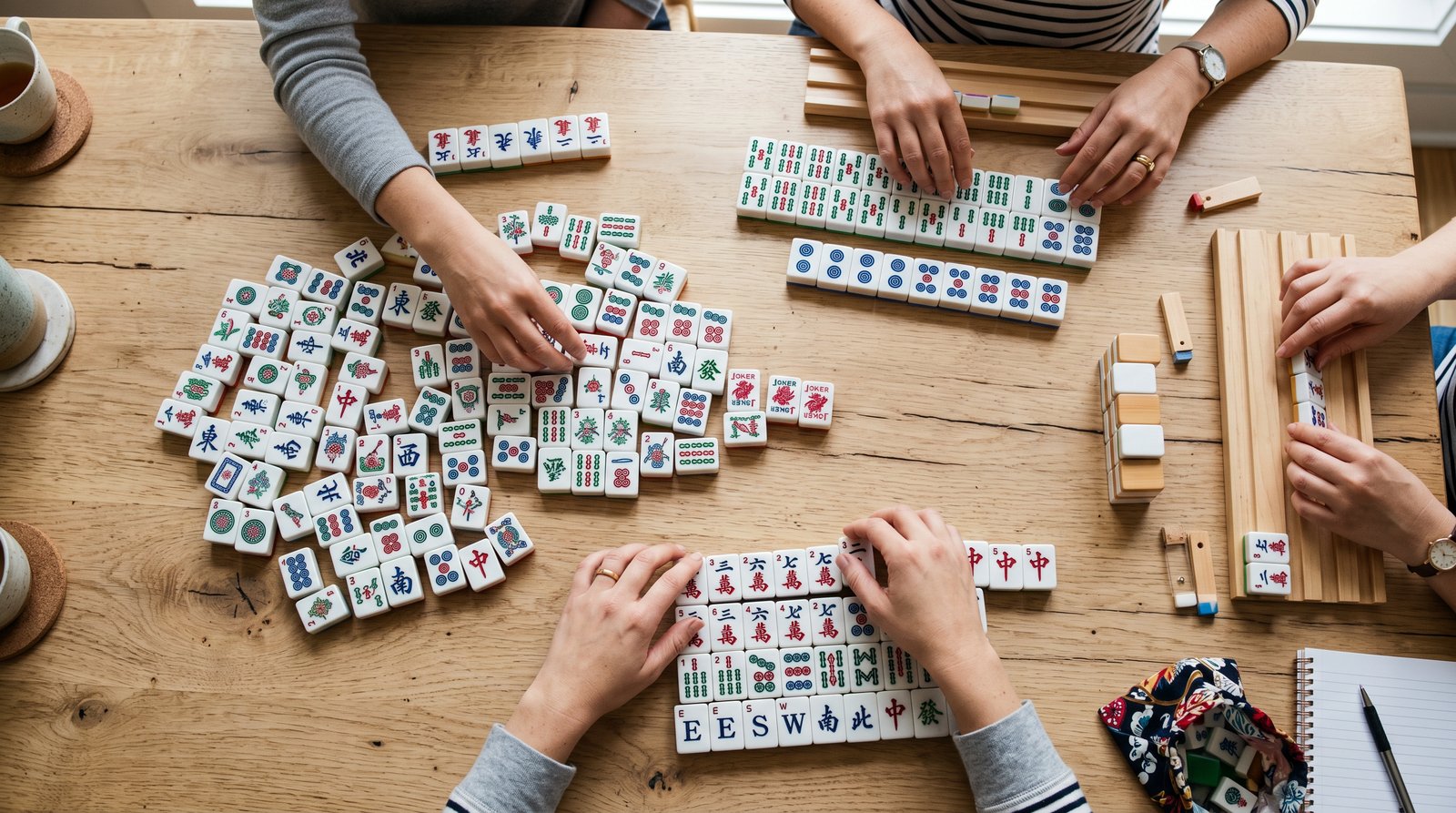
Keep the pairings consistent across all three sessions. Relationships build trust, and trust reduces the embarrassment that drives attrition. You'll often find that card buddies become regular playing partners long after the transition is over, which strengthens your group's social fabric for the rest of the year.
A few logistics: announce the pairings yourself rather than letting players self-select. Left to their own devices, your strongest players cluster together and your newest players end up in a table of mutual confusion. You know your roster. Make the matches intentionally.
One rule: Card buddies sit at the same table but don't coach during live play in Sessions 4 and 5. The support is for learning. The games are for playing.
When to Stop Hand-Holding
After Session 5, you're done. Return to your normal session format completely.
This is the part instructors get wrong most often. The transition plan works because it has an end date. If you keep running "new card review" sessions into June, you send a signal that the card is too hard to learn in a reasonable timeframe. That message creates exactly the anxiety you were trying to prevent.
Some players will still struggle after five sessions. That's fine. They'll catch up through repetition in normal play, the same way they originally learned the game. Your job was to shorten the discomfort window, not eliminate it.
If a specific player is genuinely stuck, handle it one-on-one between sessions rather than extending the group framework. The group needs to move forward.
Three Mistakes That Make the Transition Harder
Even with a solid plan, a few common missteps can undermine the whole effort.
Mistake 1: Teaching every hand on the card. You don't need to cover all of them. Players only need enough hands to feel competitive. Comprehensive card mastery happens over months of play, not in a five-session workshop. Focus on the 15 to 20 hands that will see the most table time.
Mistake 2: Letting advanced players dominate the discussion. Your strongest players will have opinions about the new card within 48 hours of its release. That enthusiasm is great, but it can steamroll the players who need more processing time. Give everyone space to ask questions, not just the first hand up.
Mistake 3: Skipping the pre-card communication. If the first time your players hear about the transition plan is the day they sit down for Session 1, you've already lost the ones who decided not to show up. The NMJL typically announces the card release timeline weeks in advance. Match their timeline with yours.
Pricing the Transition Sessions
A common question: should the five transition sessions be priced differently from your regular sessions?
Short answer: no. Treat them as part of your regular schedule. If you charge extra, you frame the transition as a special event. If you offer them free, you devalue the instruction. Either way, you create a reason for players to opt out.
The transition sessions are just good teaching. They're how you price your value as an instructor rather than apologizing for a necessary curriculum shift.
Making the New Card Your Retention Advantage
Most NMJL instructors treat the annual card change as a problem to survive. The five-session framework turns it into the opposite: a reason for players to stay.
Think about it from your players' perspective. They can learn the new card alone at their kitchen table, frustrated and slow. Or they can learn it with their group, supported by a plan, in a social environment where confusion is normal and expected. That's a genuine value proposition. It's the kind of thing players tell their friends about.
The instructors who retain the most players through card season aren't the ones with the deepest game knowledge. They're the ones with a plan and the communication skills to share it before anyone panics.
If you want a ready-made version of this framework with session outlines, communication templates, and hand-selection worksheets, the NMJL Operator's Companion packages everything into a single download. And if you're running multiple groups across different schedules, Mahjician can help you coordinate the transition across all your sessions without duplicating the planning work.