
How to Run a Mahjong Club With Mixed Skill Levels
Mixed skill levels are the single biggest structural challenge in a growing mahjong club. Here is the system that keeps beginners learning and veterans engaged at the same tables.
By Trey Peirce
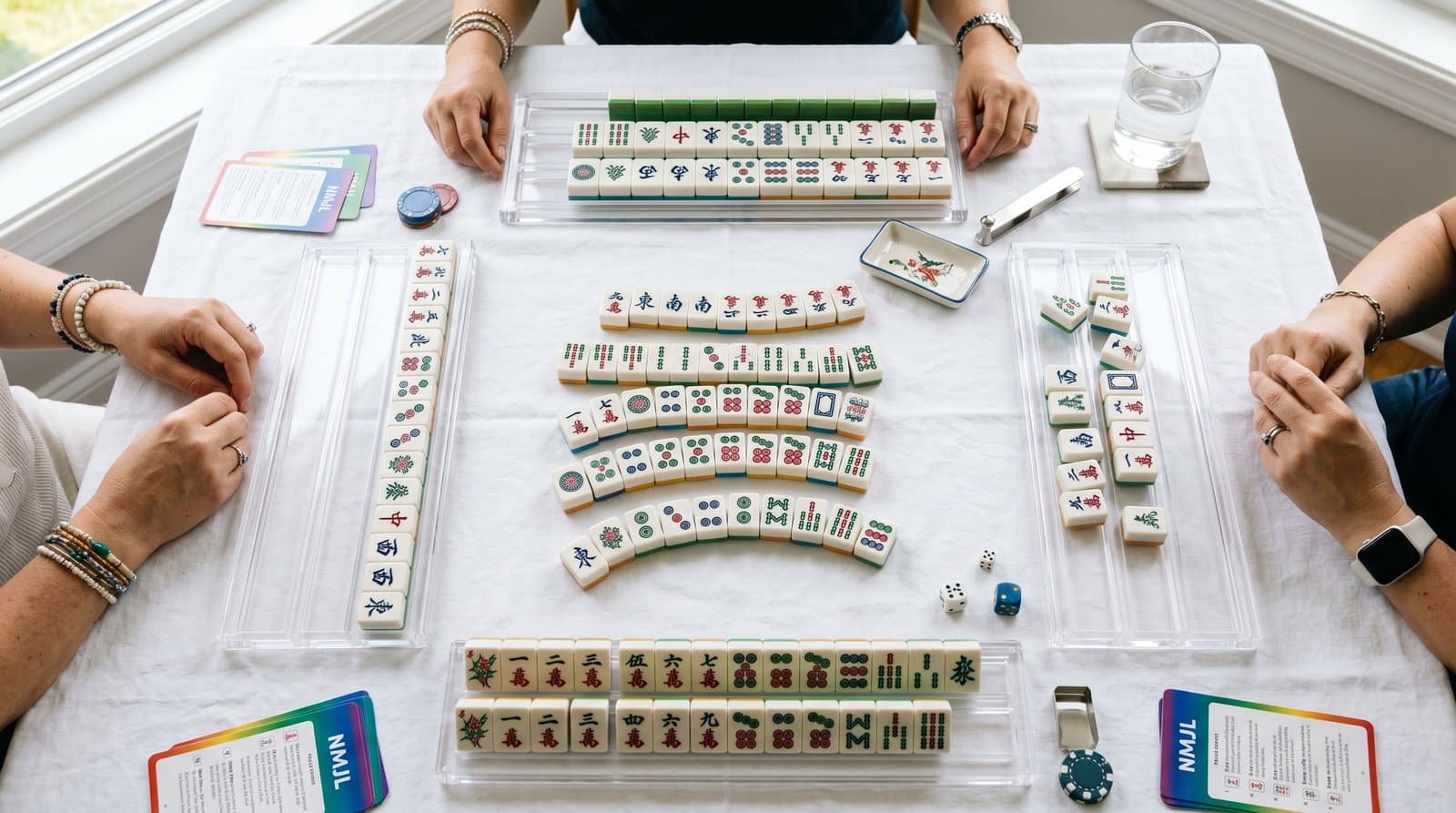
TL;DR: Mixed skill levels are the single biggest structural challenge in a growing mahjong club. The wrong table assignment sends beginners home frustrated and veterans home bored. The fix is a combination of intentional table tiers, a buddy system for new members, clear communication before anyone sits down, and using the annual NMJL card drop as a natural equalizer. You do not need to run separate clubs. You need a system.
Your fastest player just declared Mah Jongg on the fifth turn. Across the room, a first-timer is still figuring out which end of the rack faces out. One table erupts in applause; the other goes quiet with confusion. You have exactly one club, two very different experiences happening inside it, and about three weeks before that beginner stops showing up entirely.
This is the core tension of every mahjong club that actually grows. If you only attract beginners, your experienced players leave for a more competitive game. If you only cater to veterans, new blood dries up. The clubs that thrive for years solve this problem structurally, not by accident.
Here is how to build that structure from scratch.
Why Mixed Skill Levels Break Clubs
The problem is not that people play at different speeds. The problem is that nobody told them what to expect.
A beginner sitting at a table full of seasoned players will feel slow, apologetic, and unwelcome, even if every other player is perfectly kind. The pace gap alone creates pressure. According to community discussions on Modern Mahjong, one of the most common reasons new players drop out is the feeling that they are "holding everyone up."
Meanwhile, your experienced players are not villains for wanting a fast, competitive game. They showed up to play, not to teach. When you ask them to slow down every week without any structure around it, resentment builds quietly.
The answer is not to pick a side. The answer is to design your club so both groups get what they came for, most of the time, without pretending the skill gap does not exist.
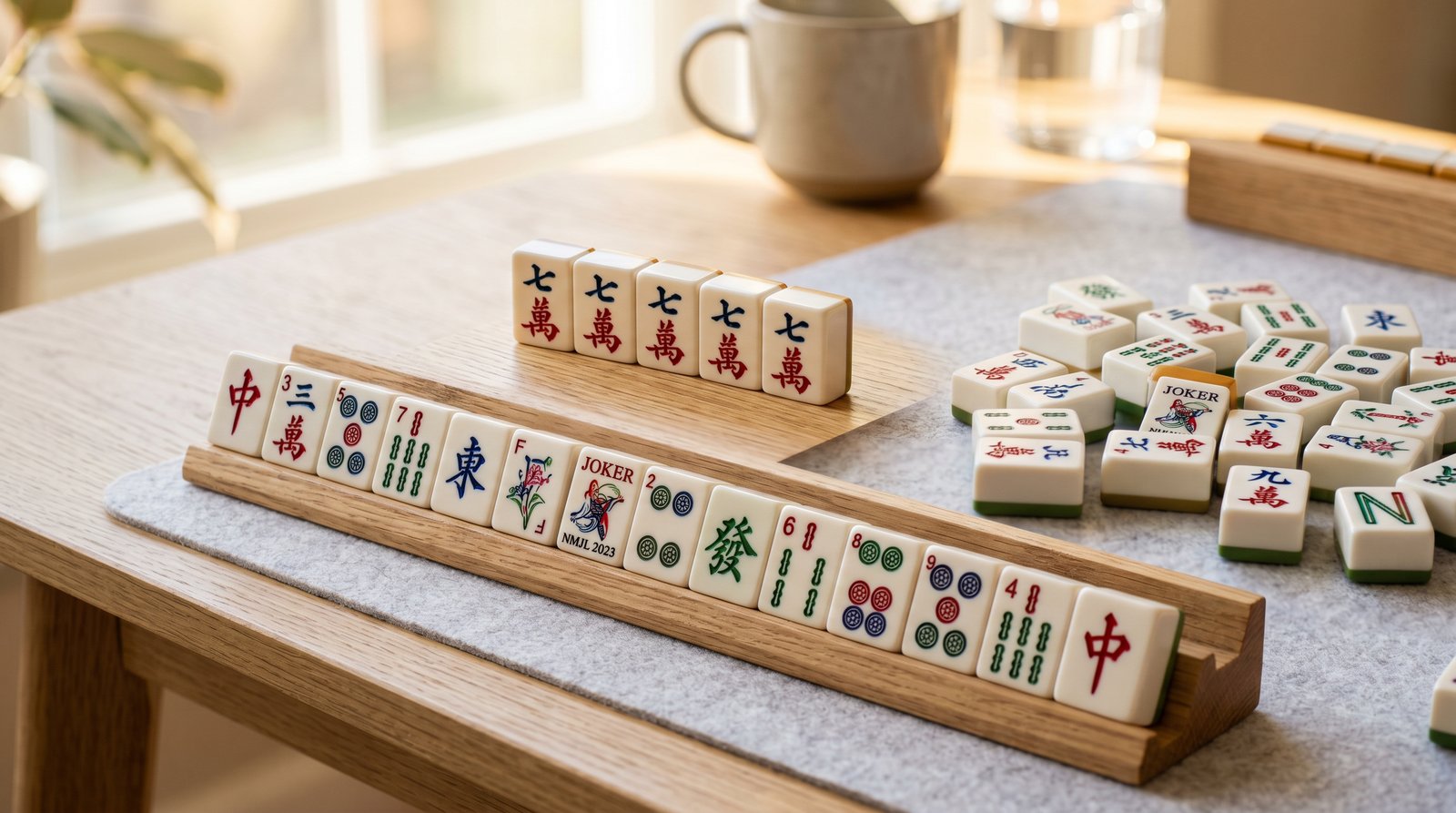
Set Up Table Tiers (Without Making It Weird)
Table tiers sound formal, but in practice they are just intentional seating. You are probably already doing a version of this informally. The difference is making it explicit and consistent.
Three Tiers That Work
Learning Tables. These are for players in their first zero to six months. The pace is slow. Questions are welcome. Someone at the table (ideally a designated buddy, more on that below) knows the current card well enough to help with hand identification. Learning tables play with open discussion: "What are you going for?" is a fair question here.
Intermediate Tables. Players who know the card, understand basic defensive strategy, and can keep a reasonable pace. Most of your club will land here. Conversation is fine, but gameplay moves along. No open-hand discussion.
Competitive Tables. Your fastest, most experienced players. Quick picks, minimal table talk during play, and an expectation of defensive awareness. Some clubs add a small buy-in at this level (five dollars per session, winner-take-all) to raise the stakes.
How to Assign Without Awkwardness
The trick is framing. Do not call them "beginner" and "advanced" tables. Nobody wants to sit at the kids' table. Instead, use language like "teaching table" and "quick-play table." At BAM! Good Time, organizers use color-coded table cards: green for learning, yellow for social, red for competitive. Players self-select, and the color system removes any judgment from the process.
You can also let players move between tiers session to session. A regular at the intermediate table who wants to test herself at competitive play should be encouraged to try it. Tiers are guidance, not caste.
Post your tier descriptions in your signup form, on your club's social media, and on a printed card at each table. When expectations are visible before anyone sits down, complaints drop sharply.
Build a Buddy System for New Members
The single highest-impact thing you can do for retention is make sure no new player walks in alone and stays alone.
A buddy system pairs each new member with an experienced player for their first three to four sessions. The buddy is not a formal teacher. They are a familiar face, someone who answers the small questions ("Do I need to bring my own card?" "Which way do the tiles face?" "What does that clicking sound mean?") that feel too embarrassing to ask the whole table.

How to Recruit Buddies
Ask your intermediate and advanced players directly. Most will say yes if you frame it correctly: "Would you be willing to sit with a new player for a couple of sessions and help them feel comfortable?" is a very different ask than "Can you teach a beginner class?"
Keep a running list of willing buddies in a Google Sheet. When a new member signs up, assign a buddy before their first session and make the introduction over text or email. The buddy should reach out at least once before the new player's first game: "Hey, I'm Linda, I'll be at your table Tuesday. Save me a seat!"
Clubs featured on Mahj Over Matter report that buddy-paired newcomers return for a second session at nearly double the rate of unmatched walk-ins. That tracks with what most operators see anecdotally.
Set Buddy Expectations
Be specific about what buddies do and do not do:
- Do: Sit at the same table for the first few games. Answer questions between hands. Help the new player read the card. Make introductions to other club members.
- Do not: Correct play mid-hand in front of the table. Take over decision-making. Promise to be available every single week.
Buddies burn out when the role is undefined. Three to four sessions is the commitment. After that, the new player should feel comfortable enough to sit anywhere at the learning or intermediate tier.
Communicate Expectations Before Anyone Sits Down
Most club friction is a communication failure, not a personality conflict.
If a veteran player snaps at a beginner for slow play, the real problem is usually that nobody told the veteran she was sitting at a learning table. If a new player feels overwhelmed, the real problem is that nobody warned her the Tuesday session skews competitive.
What to Communicate and When
At signup: Include a short description of your club's tier system. Something like: "We run tables at three speeds. New players start at our teaching tables, where questions are welcome and the pace is relaxed. Let us know your experience level when you register so we can seat you comfortably."
48 hours before each session: Send a reminder (group text, email, or Facebook group post) that includes how many tables you expect to run and at what tiers. "This Thursday: two teaching tables, three intermediate, one competitive. We have four new players joining us, so if you are on buddy duty, check your texts."
At the door: Greet every player, point them to their table, and confirm the tier. Five seconds of direction-setting prevents thirty minutes of awkwardness.
After the session: A quick follow-up to new players goes a long way. "Hey, how was your first game? Any questions about the card?" One text. That is it. The SLC Mahjong community has written about how post-session check-ins reduce first-month attrition by a meaningful margin.
For more on keeping your members engaged and coming back, see our guide on why your mahjong club keeps losing players.
Use the NMJL Card Drop as a Natural Equalizer
Every April, the National Mah Jongg League releases a new card. For about two to three weeks, everyone is a beginner again.
This is your single best window for integrating mixed skill levels. Veterans are studying unfamiliar hands. Beginners are learning the card for the first time, just like everyone else. The gap between a ten-year player and a ten-week player shrinks dramatically.
Smart operators lean into this moment deliberately.
Card Drop Strategies
Host a "New Card Night" the week the card drops. Advertise it as open to all levels. Experienced players will come because they want reps with the new hands. New players will come because the marketing says "everyone starts fresh." Both groups are telling the truth.
Print hand-identification cheat sheets. Pull common hand patterns from the new card and create a one-page guide. Hand these out at every table for the first month. This normalizes reference materials and makes beginners feel less self-conscious about checking the card constantly.
Run a "Card Study Group" alongside your regular sessions. Thirty minutes before the main game, open a table for anyone who wants to walk through the new hands together. This is not a class; it is a study group. The framing matters. Experienced players will show up because even they have hands they are unsure about.
For a deeper playbook on turning card-drop season into a growth engine, check out our post on turning the NMJL card drop into your biggest recruiting month.
The card drop is also a perfect time to run your biggest recruitment push of the year. Pair it with the strategies in our guide on how to recruit new mahjong players and you can fill your roster for the entire summer season.
Keep Veterans Engaged While You Grow
Your experienced players are your club's backbone. If they leave, your teaching pipeline collapses, your buddy system has no volunteers, and your intermediate tables lose their anchors.
Veterans stay when three things are true:
-
They get competitive play at least some of the time. If every session asks them to slow down and mentor, they will find a faster game elsewhere. Protect at least one competitive table per session, even if attendance is low.
-
Their expertise is valued, not exploited. Asking someone to buddy with a new player for three sessions is a compliment. Asking them to teach every beginner indefinitely is a chore. Rotate buddy assignments and publicly thank your mentors (a shout-out in the group chat, a small gift card at the holidays, a "Mentor of the Month" mention).
-
They have input into club structure. Once a quarter, check in with your most experienced players. "Are the tiers working? Is the pace at competitive tables where you want it? Anything you would change?" This takes ten minutes and prevents months of quiet frustration.
Community blogs like NPMahjong and The Mahj Blog are full of stories from experienced players who left clubs that took them for granted. Do not let your club become one of those stories.
No-shows can also quietly erode veteran trust, especially when a competitive table loses a player mid-session and the game falls apart. Our guide on handling mahjong club no-shows covers practical fixes.
The Session Blueprint: Putting It All Together
Here is what a well-structured mixed-level session looks like, start to finish.
One week before: Open registration (Google Form, SignUpGenius, or your scheduling tool of choice). Ask each player to self-identify their comfort level: learning, intermediate, or competitive. Cap tables at four players each.
48 hours before: Finalize table assignments. Send the lineup to your buddy volunteers. Post a reminder in your group chat with the session breakdown.
Day of, 15 minutes before start: Arrive early. Set out table cards (color-coded or labeled). Place a printed copy of the current NMJL card and any cheat sheets at learning tables.
At the door: Greet every player by name if possible. Direct them to their table. Introduce new players to their buddies.
During play: Float between tables. Spend extra time at learning tables during the first two rounds, then step back. Keep an eye on competitive tables for any pacing issues.
After the last hand: Announce next session details. Thank your buddies. Send a follow-up text to any first-timers within 24 hours.
This is not complicated. It is just intentional.
Frequently Asked Questions
How many skill levels should a mahjong club accommodate?
Three tiers work well for most clubs: learning, intermediate, and competitive. Fewer than three forces mismatched tables; more than three creates logistical headaches and makes players overthink where they belong. If your club has fewer than twelve regular players, two tiers (learning and regular) may be all you need.
What do I do when a beginner wants to sit at the competitive table?
Have an honest, private conversation. "The competitive table moves fast and plays defensively. I think you would have more fun at intermediate right now, but if you want to try competitive, go for it." Give them the choice, but set expectations clearly. Most players will self-correct after one session if the fit is wrong.
How do I handle an experienced player who refuses to slow down at a learning table?
This usually means the player was seated at the wrong table. Check your assignment process. If the player deliberately chose the learning table and still will not adjust pace, a direct conversation is appropriate: "Learning tables are for relaxed play. If you want a faster game, the competitive table has a seat open Thursday." Redirect, do not scold.
Should I charge different prices for different skill levels?
No. Uniform pricing keeps things simple and avoids any perception of hierarchy. If you want to add a buy-in at competitive tables, make it optional and player-funded (everyone at the table chips in, winner takes the pot). Club dues should be the same for everyone.
How often should players move between tiers?
Let players self-select each session. Some will move up quickly; others will stay at the learning tier for months. Both are fine. The goal is comfort and engagement, not advancement on a fixed timeline.
Can I run a mixed-level club with fewer than twelve players?
Absolutely. With eight players (two tables), run one learning and one intermediate table. Rotate one experienced player to the learning table each session so it is not the same person mentoring every week. With just four players (one table), focus on setting a pace that accommodates the least experienced player, and save competitive play for sessions where all four are at a similar level.
Ready to Stop Winging It?
Running a mahjong club with mixed skill levels is not about talent or charisma. It is about structure. Table tiers, buddy systems, pre-session communication, and smart use of the annual card drop will do more for your retention than any amount of goodwill.
If you are managing table assignments on paper and sending reminders manually, Mahjician can help. The platform handles signups, table assignments by skill level, automated reminders, and waitlist management so you can spend your energy on the room, not the spreadsheet. Book a quick demo and see if it fits your club.
Your players showed up because they love the game. Your job is to make sure the room loves them back.