How Mahjong Came to America (And Why It Never Left)
American mahjong traces back to a single Standard Oil employee named Joseph Park Babcock, who shipped the first sets from Shanghai in 1920. A century later, the institutional infrastructure he accidentally created is powering the biggest mahjong revival in American history.
By Trey Peirce
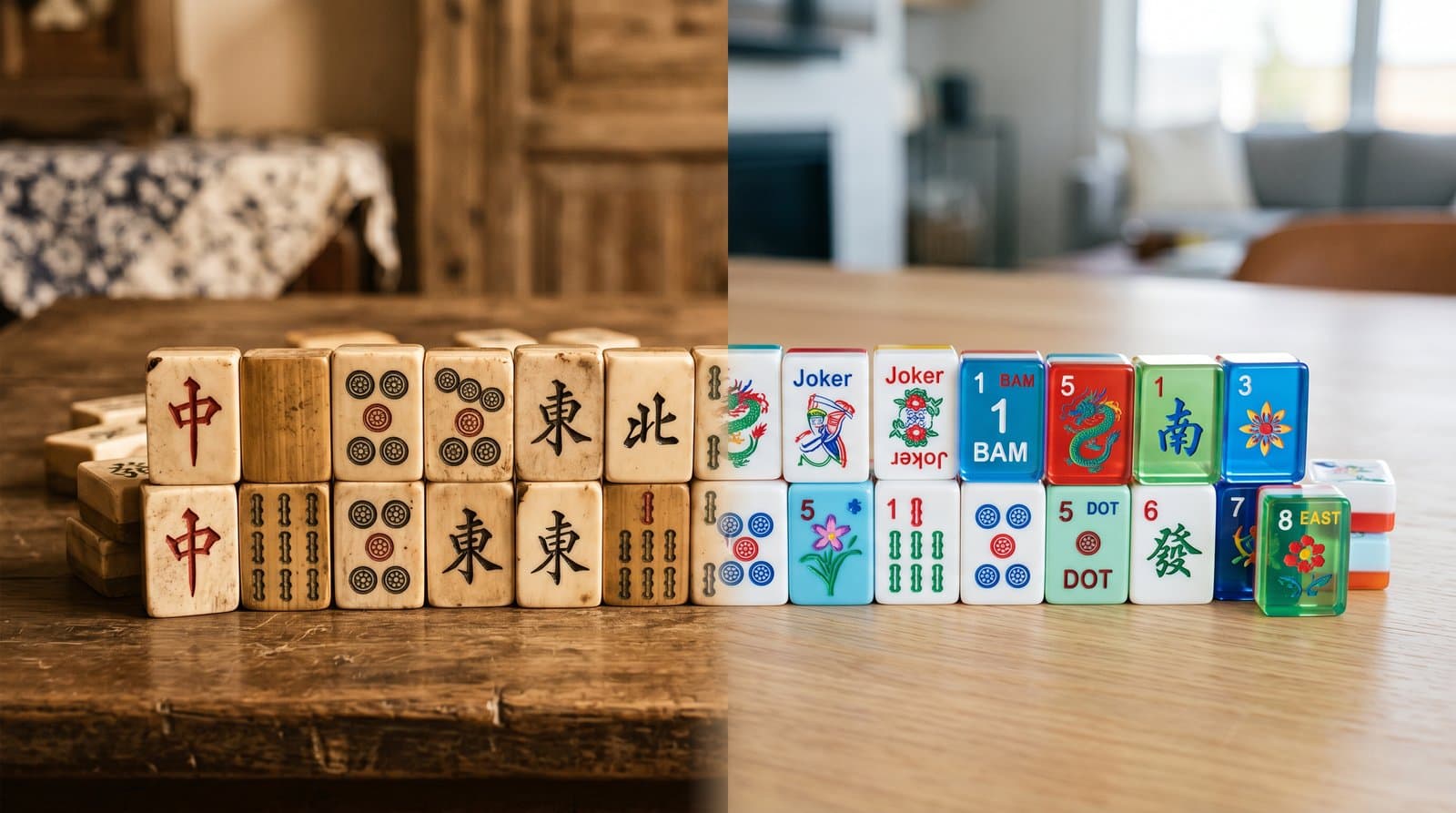
TL;DR: Joseph Park Babcock, a Standard Oil engineer working in Shanghai, trademarked the name "Mah-Jongg" and shipped the first Westernized tile sets to America in 1920. The game became a 1920s cultural craze, collapsed, and was rebuilt from scratch by a group of women in a New York hotel room in 1937. Jewish-American communities kept it alive through decades when no one else was paying attention. Now a post-pandemic revival is bringing hundreds of thousands of new players to clubs across the country, and the organizational structures that sustained mahjong for a century are more relevant than ever.
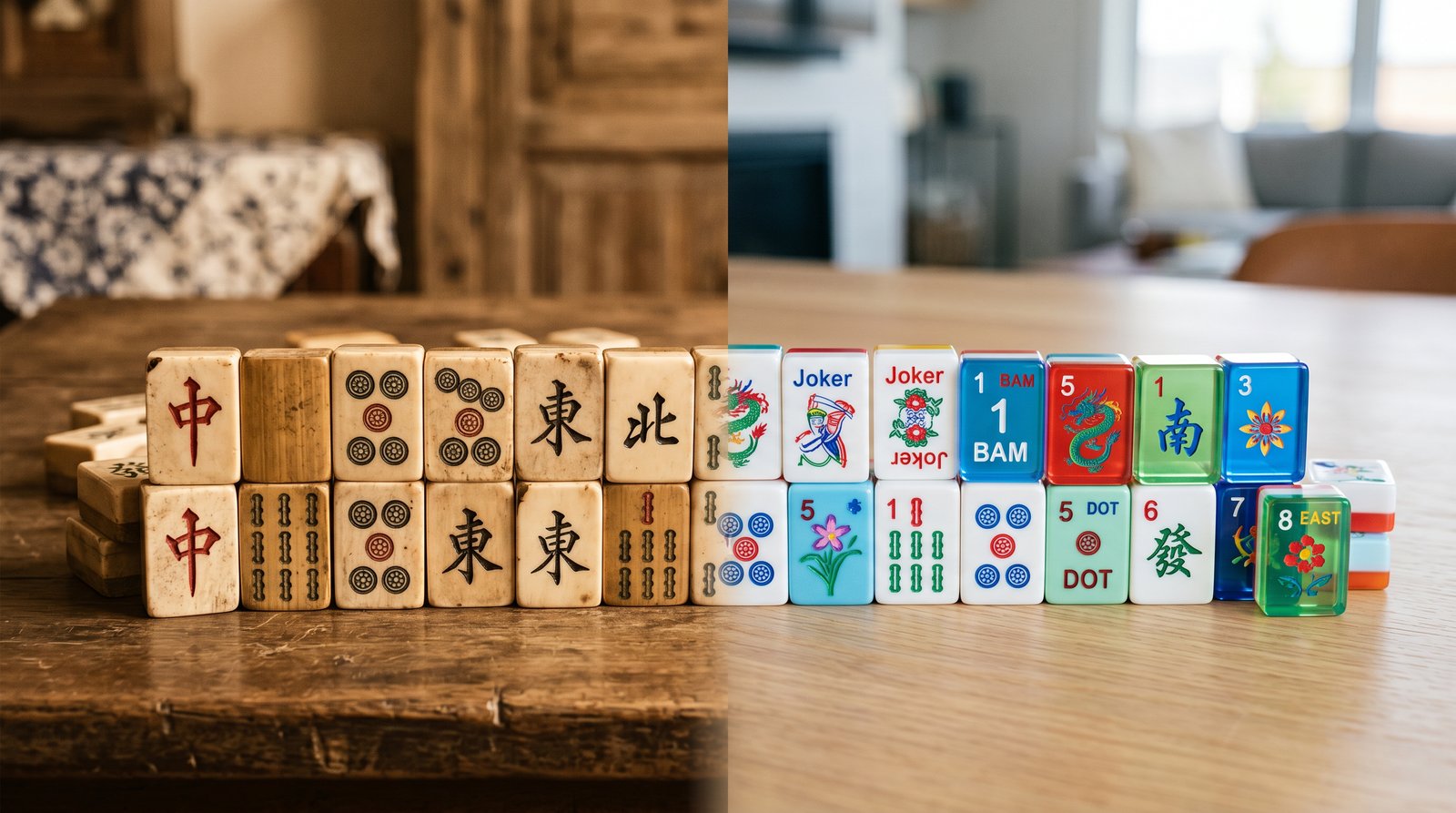
The history of American mahjong begins with one man: Joseph Park Babcock, a civil engineer from Lafayette, Indiana, who arrived in China in July 1913 as a Standard Oil employee. He learned the game, saw commercial potential, trademarked the name "Mah-Jongg," and on October 26, 1920, initiated the first exports of Westernized tile sets from Shanghai to the United States. He added Arabic numerals to the tiles so Americans could read them. Everything that followed traces back to that decision.
A Standard Oil Employee, a Red Book, and a Bet on American Parlors
Babcock was born in 1893 and graduated from Purdue in 1912. He was 20 years old when Standard Oil sent him to China. For the first several years he was there as an engineer, doing what Standard Oil engineers did. Then he encountered mahjong, the tile game played across China in dozens of regional variants, and recognized something that most Westerners in Shanghai were missing: this game was genuinely interesting, and it was portable.
By the early 1920s, he had not only learned the game but simplified and codified it for Western audiences in a pamphlet that became known as the "Red Book," a ruleset designed to make mahjong accessible to people who had never seen a Chinese character. He partnered with tile manufacturers in Shanghai to produce sets with Western indices, numbers and letters that American players could read without any prior knowledge.
The double-J spelling in "Mah-Jongg" was Babcock's own trademark, registered to protect his commercial investment. He wasn't preserving a cultural artifact; he was building a product. The Red Book rules stripped down the complexity of Chinese regional variants and gave American parlors a consistent, learnable game. As The Mahjong Tile Set has documented, Babcock was one of several entrepreneurs attempting to commercialize the game in the West, but he moved fastest and protected his position most aggressively.
That bet on American parlors paid off faster than almost anyone expected.
The 1920s Craze That Made Mahjong China's Sixth-Largest Export
Babcock's first sets arrived at Abercrombie and Fitch in New York City, and the reception was immediate. Within a few years, mahjong had become a genuine cultural phenomenon. By April 1924, mahjong sets were the sixth-largest import from Shanghai into the United States. Life Magazine put the craze on its cover that same month.
The supply chain became a circular absurdity that says everything about the scale of demand: cattle bones were shipped from Chicago and Kansas City to Shanghai, where craftsmen carved them into tiles, and the finished sets were shipped back to America. The game was moving so much product that it was reshaping transoceanic trade routes.
Parker Brothers entered the market in 1923. President Warren Harding played at the White House. Hollywood adopted it. Department stores held mahjong nights. Mahjong became shorthand for fashionable leisure in a way that few imported games ever achieve in America, and the companies trying to supply that demand could barely keep up.
The collapse was just as fast. Rule fragmentation was the first problem: dozens of competing rule sets created confusion, and players in one city often couldn't sit down with players from another. Babcock's Red Book was one version. Chinese associations in American cities promoted rules closer to the original game. Other entrepreneurs published their own simplified variants. A player who learned in Boston might show up in Chicago and find the table playing by entirely different standards.
The Great Depression finished the job. Mahjong sets were a luxury purchase. By the early 1930s, the craze had faded from mainstream American culture almost entirely.
Almost.
The National Mah Jongg League: 400 Women in a New York Hotel Room
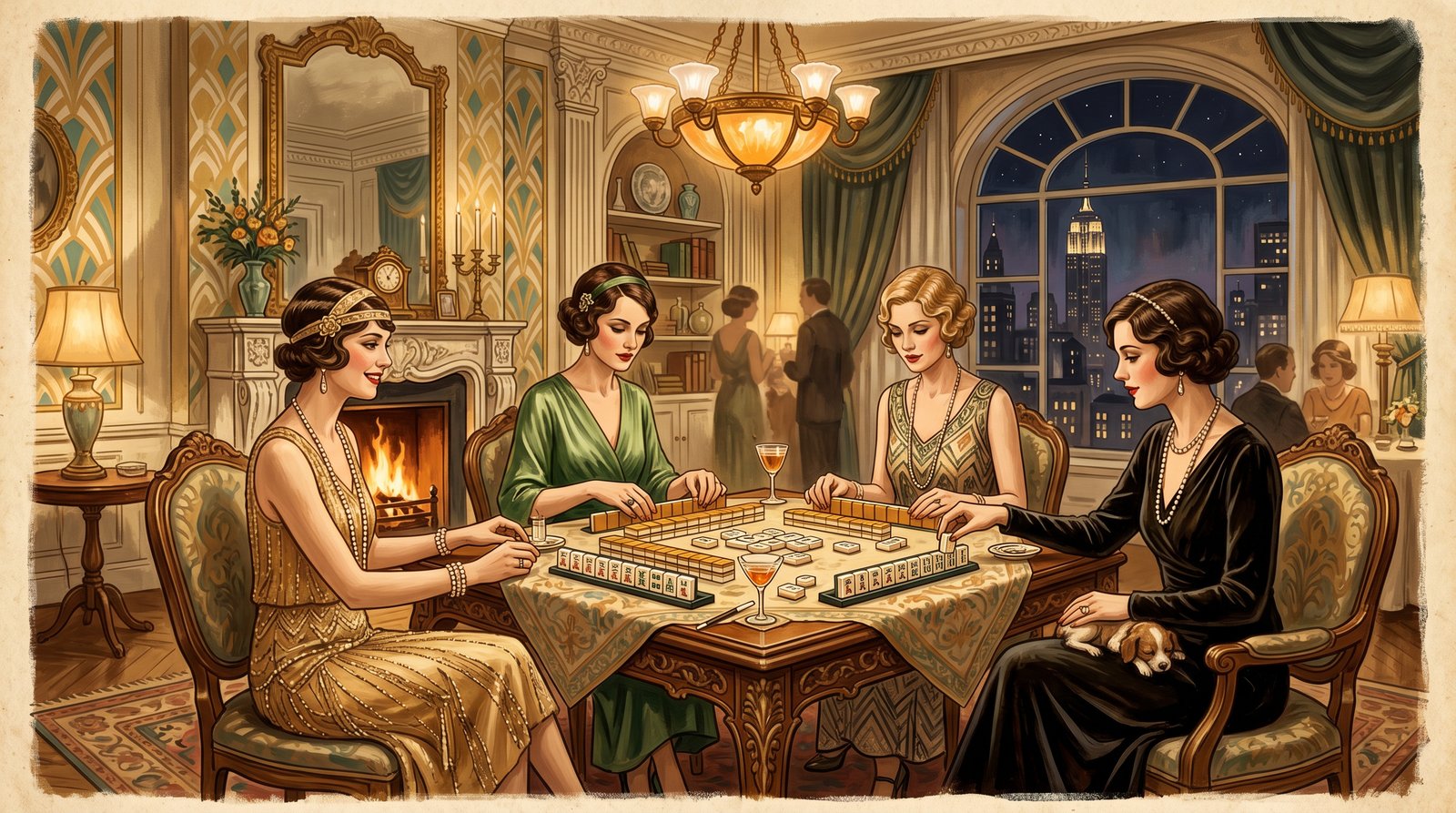
In the fall of 1937, a group of women organized a meeting at the Essex House hotel in New York City. They expected around 200 people. Roughly 400 showed up, twice the anticipated crowd, and the National Mah Jongg League was effectively born in the chaos of that overflow.
The NMJL was founded by Viola Cecil, who became its first president, and Dorothy Meyerson, who served as vice president. It started with 32 official members.
Today it has more than 350,000.
The innovations the NMJL introduced are the reason American mahjong exists as a distinct form of the game. The annual card, published every spring since 1937, establishes the winning hands for that year's play. It is the institutional heartbeat of American mahjong: clubs buy it, tournaments use it, and new players learn from it. The Charleston, the pre-game tile-passing ritual, became standard NMJL play. Jokers were added in 1961, a distinctly American modification that Hong Kong-style players do not use and that remains one of the clearest markers of the difference between American and other mahjong variants.
The League also established a charitable mission from the beginning. Fundraising for the American Cancer Society, Hadassah, St. Jude's Children's Research Hospital, and other organizations became embedded in how the NMJL operated. That charitable structure would later become one of the mechanisms that kept the game alive.
How Jewish-American Women Kept the Game Alive
By the 1950s, mahjong in America had become firmly associated with Jewish women in the popular consciousness. That association was not an accident. It was the result of a specific institutional loop that historian Annelise Heinz, whose research on mahjong and American culture has been covered by Stanford's history department, describes this way: "Jewish women adapted mahjong, cultivating ties of female friendship and ethnic community."
The mechanism was straightforward. Synagogue sisterhoods and Hadassah chapters sold NMJL cards as fundraisers. Selling cards required players. Getting players required teaching the game. Teaching the game created more players, who bought more cards. The loop was self-sustaining and did not require mainstream cultural interest to survive.
Cold War suburbanization amplified this. As families moved to the suburbs, weekly mahjong games became one of the few female-only social spaces that didn't require justification. You could tell your husband you were playing mahjong on Tuesday afternoon and no one asked follow-up questions. Former NMJL president Ruth Unger has identified this self-sustaining community ecosystem as the reason the game survived decades when it had essentially no visibility in broader American culture.
As Tablet Magazine has documented, this is a story about institutional persistence more than cultural preference. The game survived because organizations kept running it. The NMJL annual card gave those organizations a shared standard. Without the card, you get the 1920s fragmentation problem again. With the card, you get a national community that can sit down at any table and know what game they're playing.
It's also worth being precise about what "Jewish women's game" actually describes. Chinese American communities never stopped playing mahjong; they simply played different variants, primarily Hong Kong-style and Cantonese-style, in separate community contexts. Amy Tan named this dual ownership directly in The Joy Luck Club in 1989, in which the game carries entirely different cultural weight for the Chinese-American characters than it does for their white neighbors. The NMJL's version and the Chinese-American versions coexisted in the same country for decades without much overlap. That separation is only now beginning to dissolve.
The Revival Nobody Saw Coming
The numbers from the past few years are difficult to explain without the word "unprecedented."
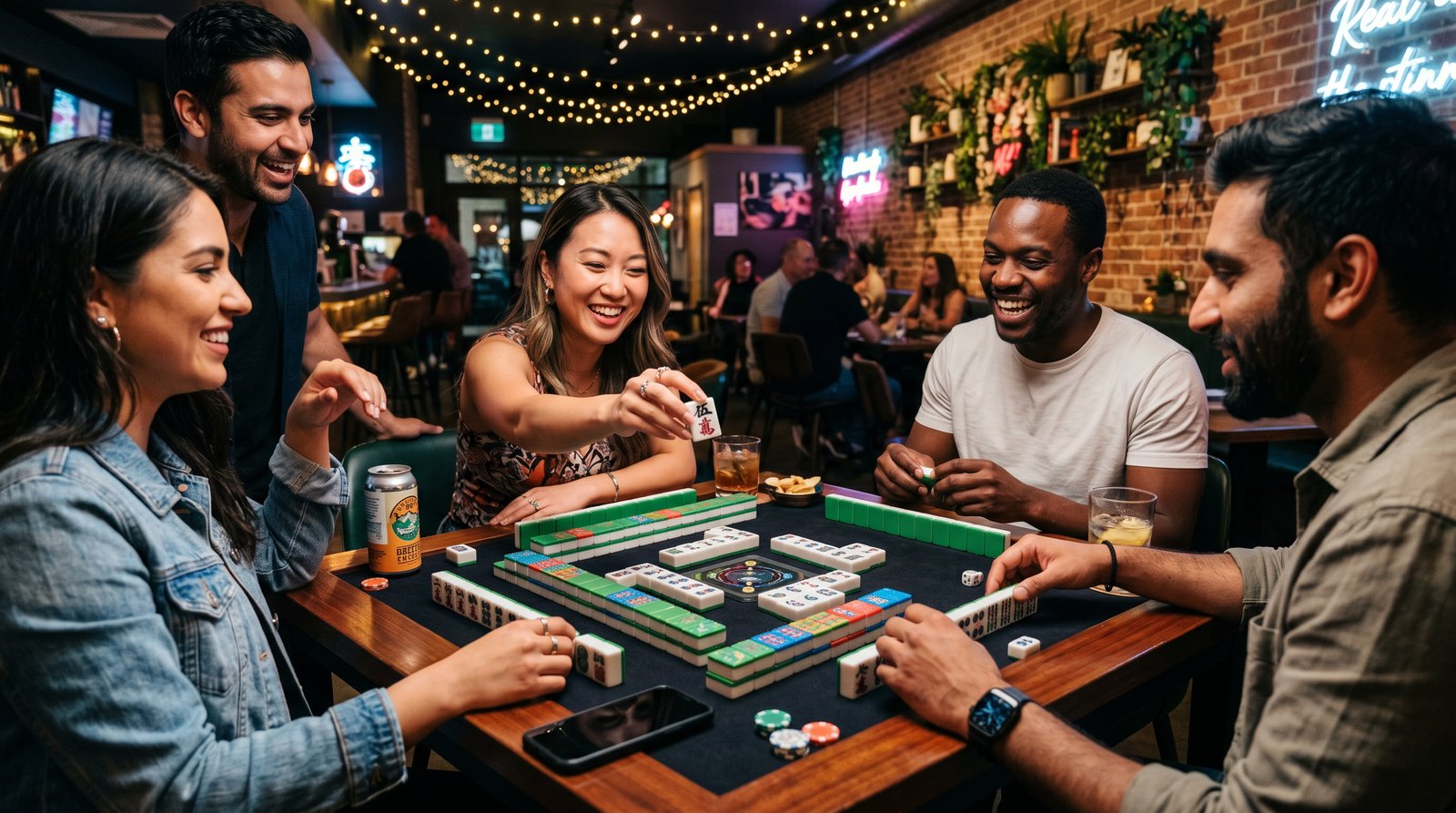
Yelp reported a 4,467% surge in mahjong club searches between September 2024 and August 2025. Eventbrite recorded a 179% increase in mahjong events and a 365% increase in mahjong-related searches between 2023 and 2024. Green Tile Social Club, founded in New York City in May 2022, grew to 8,000 attendees within its first few years. The global mahjong market was valued at $1.2 billion in 2024, with forecasts projecting $2.1 billion by 2033.
These are not numbers from an established institution counting its existing membership. They are numbers from search engines and event platforms tracking people who had never looked for a mahjong club before and suddenly wanted one. That is a different kind of signal.
NPR's coverage in January 2026 pointed to a "thirst for gathering" in the post-pandemic period, a phrase from organizer David Horowitz that captures something real about why people are showing up. Screens are not the competition here; they're the fatigue. People want to sit across a table from other people and do something with their hands.
The International Council of Shopping Centers framed mahjong as "the next pickleball" for experiential retail, which is the kind of comparison that lands differently depending on your feelings about pickleball but communicates the scale of institutional interest accurately enough.
Pop culture has played a role. The mahjong scene in Crazy Rich Asians (2018) does not appear in Kevin Kwan's source novel; director Jon M. Chu added it specifically because he wanted the film to center a game that carried weight in Chinese-American cultural memory. That scene reached audiences who had never heard of the NMJL or the Charleston and made them curious. Curiosity became searches. Searches became club inquiries.
For a deeper look at who is actually showing up to these clubs and what they want, see Who Plays American Mahjong? For a fuller breakdown of the current boom statistics, see The Mahjong Boom Is Real.
What This History Means If You Run a Club Today
The infrastructure that kept mahjong alive for a century was not cultural. It was organizational.
Nobody saved mahjong by writing essays about it or making films about it or publishing think pieces about its significance. Viola Cecil and Dorothy Meyerson saved it by running a meeting in a hotel room, printing a card, and showing up the following year to do it again. Synagogue sisterhoods saved it by selling those cards as fundraisers and then teaching enough new players to justify next year's order. The game survived because specific people decided that running the game was their job.
If you operate a mahjong club today, you are part of a tradition that is older than most of your players' grandparents' furniture. The 400 women who overflowed the Essex House in 1937 were doing exactly what you are doing: finding a space, setting a time, making sure people knew how to play, and keeping score. The fact that you probably have software to help with that and they had index cards changes the logistics but not the function.
The history of American mahjong is a history of operators. People who ran the room, sold the cards, taught the game, and came back next week.
The revival is real, the demand is there, and new players are searching for clubs in cities where clubs barely exist yet. The question is not whether mahjong will grow. The question is whether there will be enough organized, well-run clubs to absorb that growth and turn first-time players into regulars.
That person today is you.
Mahjician is built for exactly this kind of club operator: the person who handles membership, tracks attendance, manages tables, and keeps the game running week after week. If you're running a mahjong club and still managing all of that in spreadsheets or group texts, learn how to start building something more sustainable and then come see what Mahjician can do.
We'd love to show you around. Book a demo and see how it works in about 30 minutes.